Korean War June 1950 to July 1953
At the end of World War II, the U.S. military underwent a massive downsizing—approximately 95 percent of its wartime strength was eliminated. In retrospect, the reduction proved excessive. The limited funding available for new equipment was directed primarily toward forces assigned to Europe, as no significant threat was perceived in Asia until North Korean forces suddenly crossed south of the 38th parallel in 1950.
When U.S. Army forces withdrew from Korea, they removed their tanks, heavy artillery, and aircraft, leaving South Korean forces equipped with little more than small arms. During the five years following World War II, the U.S. military also lost much of its senior leadership with combat experience. Many younger officers who replaced them were regarded as more concerned with appearance and discipline than with combat readiness—a factor reflected in later incidents.
Crash boats became part of the newly independent U.S. Air Force, then only three years old. The service was confident in its emerging identity but possessed limited knowledge of its rescue boat operations and showed little institutional interest in them. With the activation of the Air Rescue Service, responsibility for crash boats reverted in March 1950 to local airbase service organizations. The prevailing attitude was that “if it doesn’t fly, it doesn’t matter,” and non-flying personnel were dismissively referred to as “ball-bearing WAFs.” As a result, the officer career path in marine operations was effectively eliminated.
At the conclusion of World War II, the U.S. Navy had destroyed many of its PT boats rather than incur the expense of transporting them back to the United States. Fortunately, the USAF retained a small number of serviceable boats in the former Pacific Theater of Operations, although only a few remained operational.
At the outbreak of the Korean War, Air Force leadership was still negotiating with the Army and Navy to define the service’s mission and operational boundaries. The Air Force adopted an approach that “if it isn’t expressly prohibited, it must be permitted.” This outlook allowed a group that would later become the 22nd Crash Rescue Boat Squadron to expand beyond traditional rescue duties into unconventional warfare roles. In early July 1950, the 6160th Air Base Group reactivated boat operations by forming Detachment 1. In July 1952, this unit was redesignated the 22nd Crash Rescue Boat Squadron, officially headquartered at Itazuke Air Base in Fukuoka, Japan, with its primary maintenance facility at the Fukuoka shipyard. Operational control passed to Fifth Air Force Headquarters, leaving the 6160th responsible mainly for administrative support.
During the Korean War, many traditional air-sea rescue missions increasingly were carried out by amphibious aircraft and helicopters, freeing the 85-foot crash boats for special operations. These special—or “spook”—missions constituted a significant portion, and according to many crewmen perhaps the majority, of operations conducted off the North Korean coast and, in a few cases, China.
When the war began, the last serviceable crash boats in the Far East were in storage, awaiting eventual shipment ba
During the Korean War, many traditional air-sea rescue missions increasingly were carried out by amphibious aircraft and helicopters, freeing the 85-foot crash boats for special operations. These special—or “spook”—missions constituted a significant portion, and according to many crewmen perhaps the majority, of operations conducted off the North Korean coast and, in a few cases, China.
When the war began, the last serviceable crash boats in the Far East were in storage, awaiting eventual shipment back to the United States. Their crews had already been reassigned to other Air Force duties, most unrelated to marine operations.
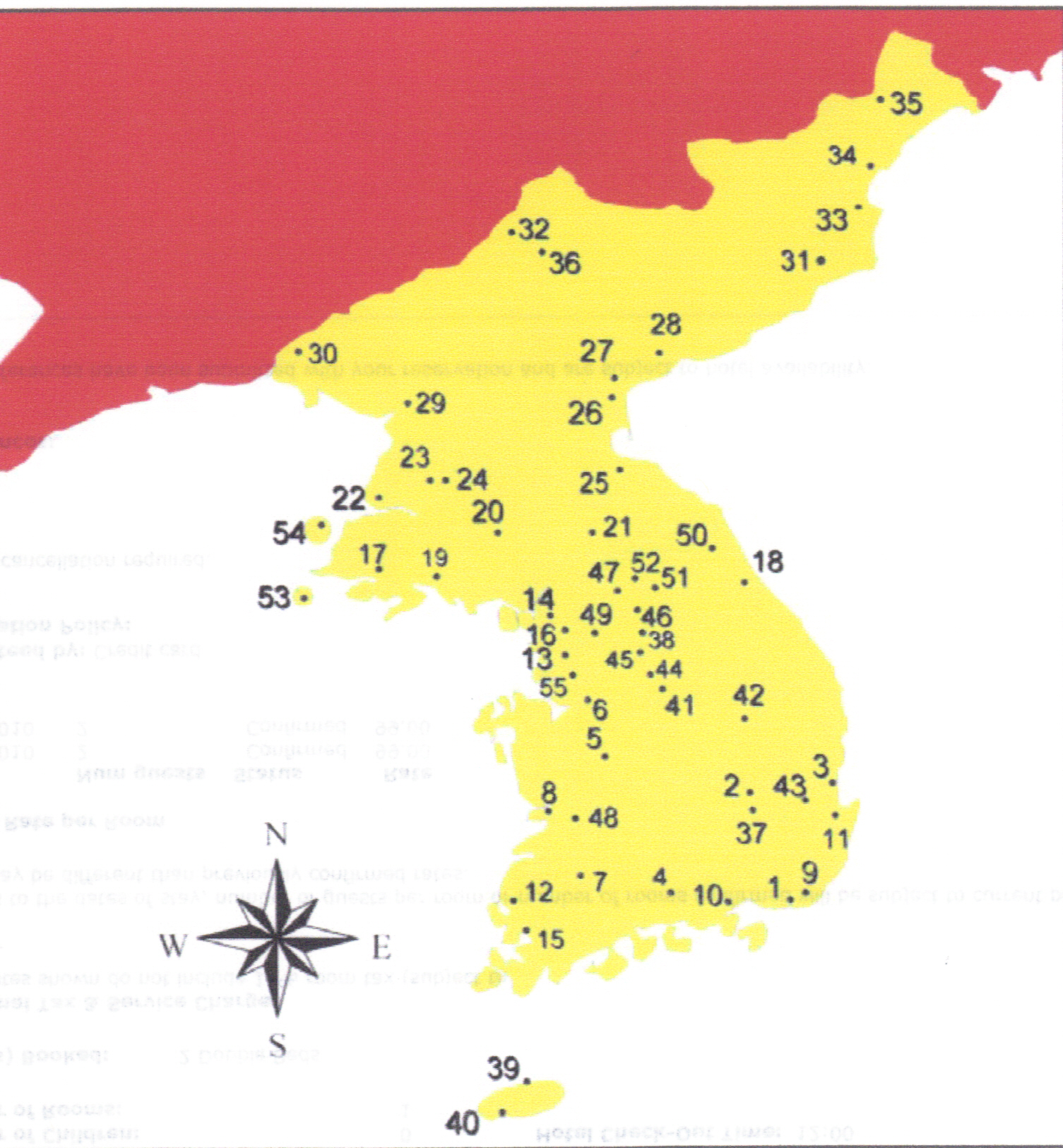
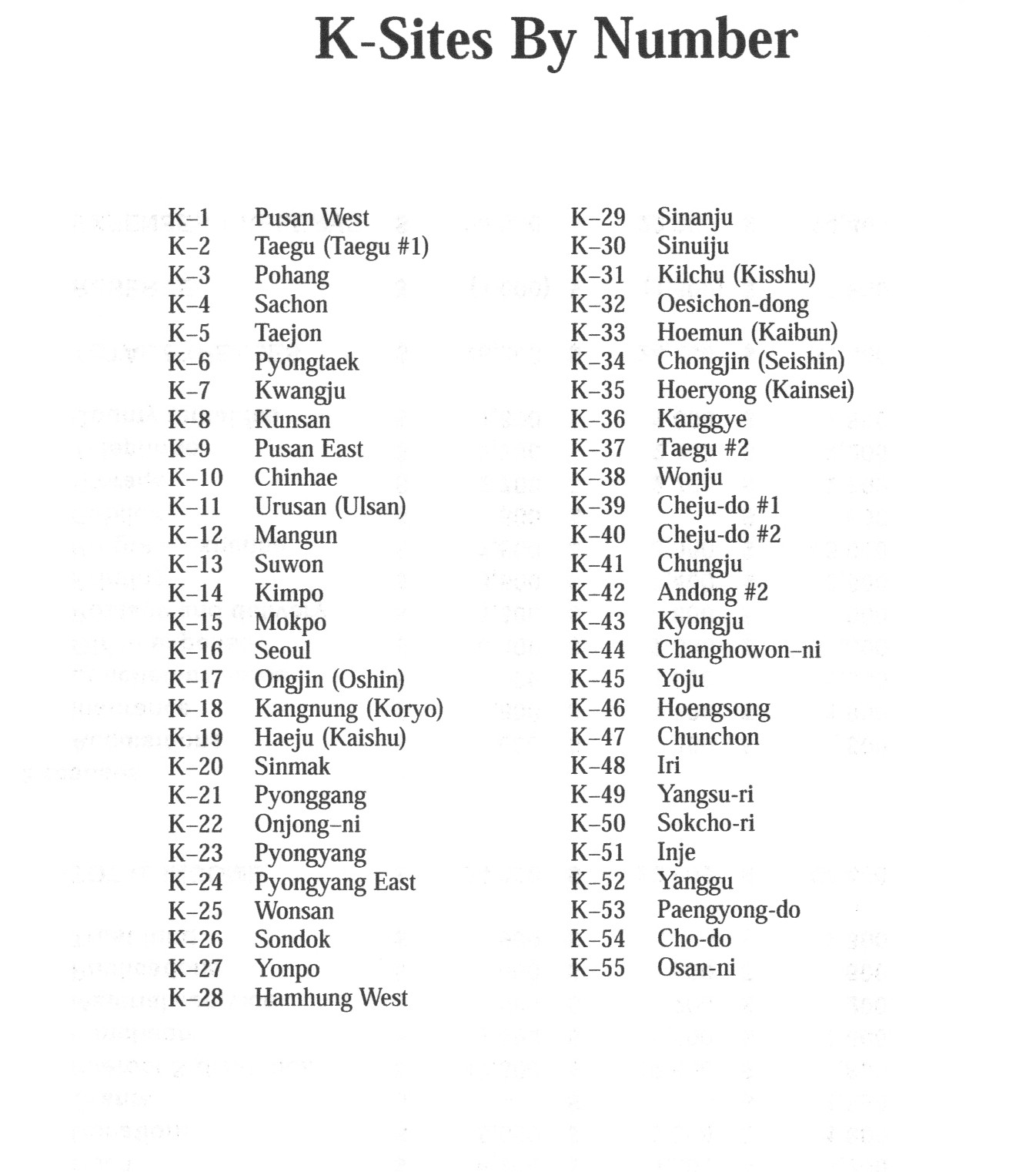
The four 85-foot crash boats—R-1-654, R-1-664, R-1-667, and R-1-676—operated from an advanced base near Inchon on a small island roughly fifty miles north of the 38th parallel. The island, Cho-Do, lay about five miles off the mouth of the Chinnampo River in an area designated K-54. Crescent-shaped and rocky, Cho-Do offered little in the way of comfort or infrastructure. A small U.S. military detachment occupied one end of the island, equipped with a helipad but no paved runway. On rare occasions a C-47—the military counterpart of the DC-3—would brave the terrain and land directly on the hard-packed beach.
“K” Map and List
Everything on Cho-Do was improvised. Gasoline for the boats arrived in 55-gallon drums, which were scattered in small groups along the shoreline so that a single enemy airstrike could not destroy the entire fuel supply. When refueling was required, the drums were lashed together and towed out through the surf to waiting boats. Later in the war, conditions improved slightly when a small fuel barge began making deliveries, bringing about thirty drums at a time along with a pump that simplified the refueling process.
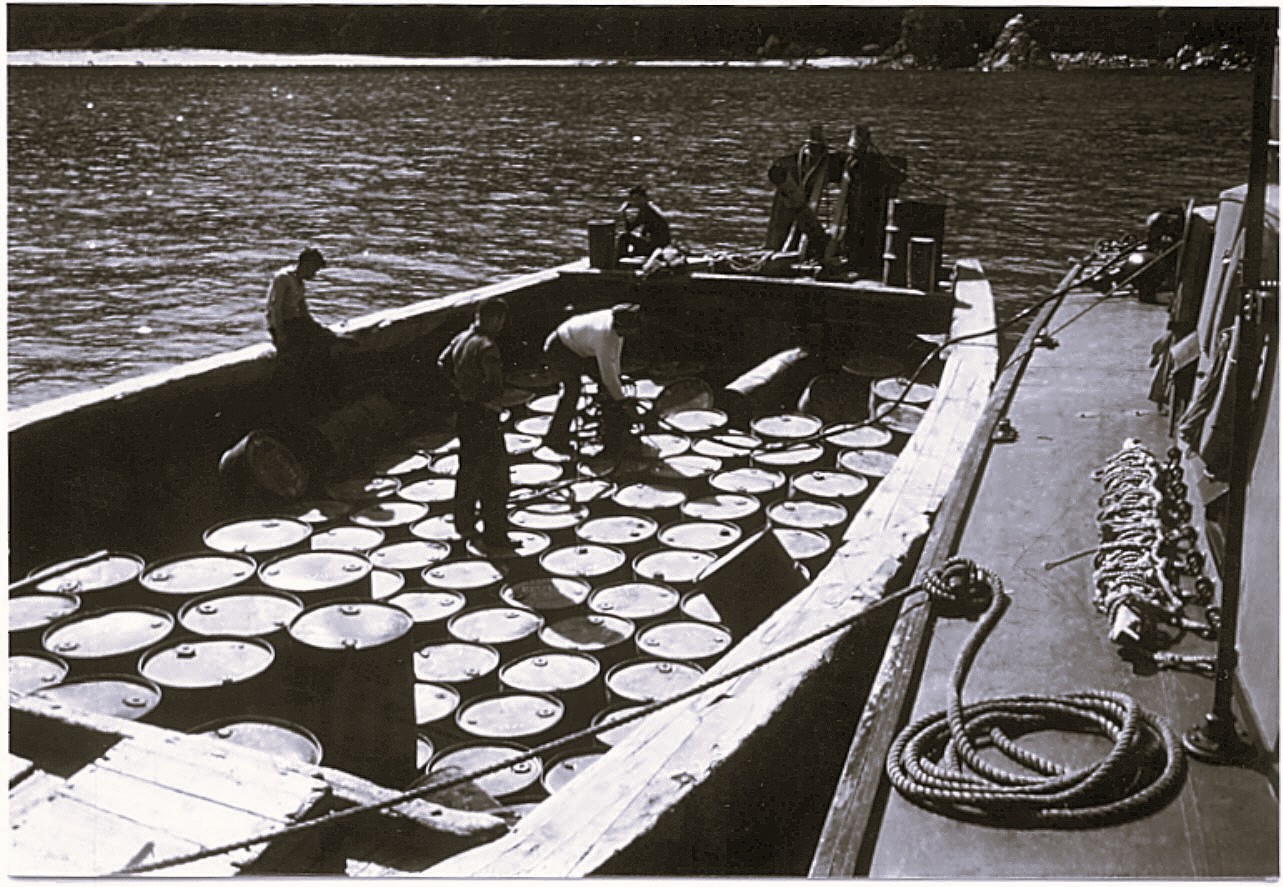
Cho-Do Island Fuel Barge File: Boats at Cho-do\fueling
Near the center of the island stood a tiny fishing village, its routines continuing quietly alongside the war. From this isolated outpost, the rescue boats operated under the direct control of Fifth Air Force, conducting special operations missions along the hostile west coast of North Korea. No other U.S. naval or Air Force vessels operated north of the 38th parallel on that coast, leaving the crash boats alone in waters that were both dangerous and largely unprotected.
Life aboard a crash boat off Korea was demanding and often uncomfortable. The boats rarely remained in one place for long, constantly shifting positions between the Korean coastline and Japanese waters in order to remain beneath the anticipated flight paths of aircraft traveling to and from combat bases. Winter brought bitter cold, made worse by the fact that none of the boats possessed functioning heating systems. Crews endured freezing temperatures with little relief, sleeping when they could and working in almost frozen seas and icy winds. Assignments at sea frequently lasted two or three months at a time. Shore visits were brief and utilitarian, limited to primitive bases where crews took on fuel, water, and food before returning to patrol. Only major mechanical problems justified a trip back to Fukuoka, Japan—a place many crewmen came to regard simply as “civilization.”
Conditions aboard the boats were undeniably harsh, yet veterans later reflected that, difficult as their service had been, their circumstances were still preferable to those faced by infantrymen fighting ashore in Korea’s mountains and frozen valleys. From their small vessels off a hostile coast, crash boat crews carried out their missions in relative obscurity, enduring isolation, weather, and danger as a routine part of daily life.
A tour of duty at Cho-do lasted one week. When a boat returned from the island to Inchon, it tied up inside the tidal basin to prepare for the next rotation. The following day was devoted to resupply. Fuel arrived first, delivered by tanker truck directly to the dock, followed by water and food brought down in a rumbling 6×6 cargo truck.
The provisions were predictable and rarely varied. According to crewman Bud Tretter, the boats typically received about twenty loaves of bread, several large rectangular tins of Spam, and a generous supply of canned vegetables. There would also be a crate of potatoes and another of fruit—usually oranges or apples. Along with the food came a box of “101 rations,” which contained cartons of cigarettes, Snickers and Milky Way candy bars, bars of Cashmere Bouquet soap, and a collection of miscellaneous comforts intended to improve morale. Unfortunately, nearly everything in the box absorbed the strong scent of the soap, leaving even the food faintly perfumed.
Basic hygiene required improvisation. A nearby U.S. Army motor pool at Inchon had constructed a makeshift shower facility. Black water barrels were positioned atop a fifteen-foot cliff, allowing gravity to feed water down to a row of sprinkler heads below. The routine was simple: get wet, soap up quickly, and rinse off as fast as possible to conserve the limited water supply. The crash boat crews were allowed to use these showers, though they provided only cold water and operated only during warmer weather.
Laundry services were equally informal. When boats returned to Inchon, a local laundry boy collected fatigues and sweatshirts for washing. Bed sheets received a more nautical treatment—once they had turned sufficiently brown from use, they were tied to a line and towed behind the boat underway until they came clean.
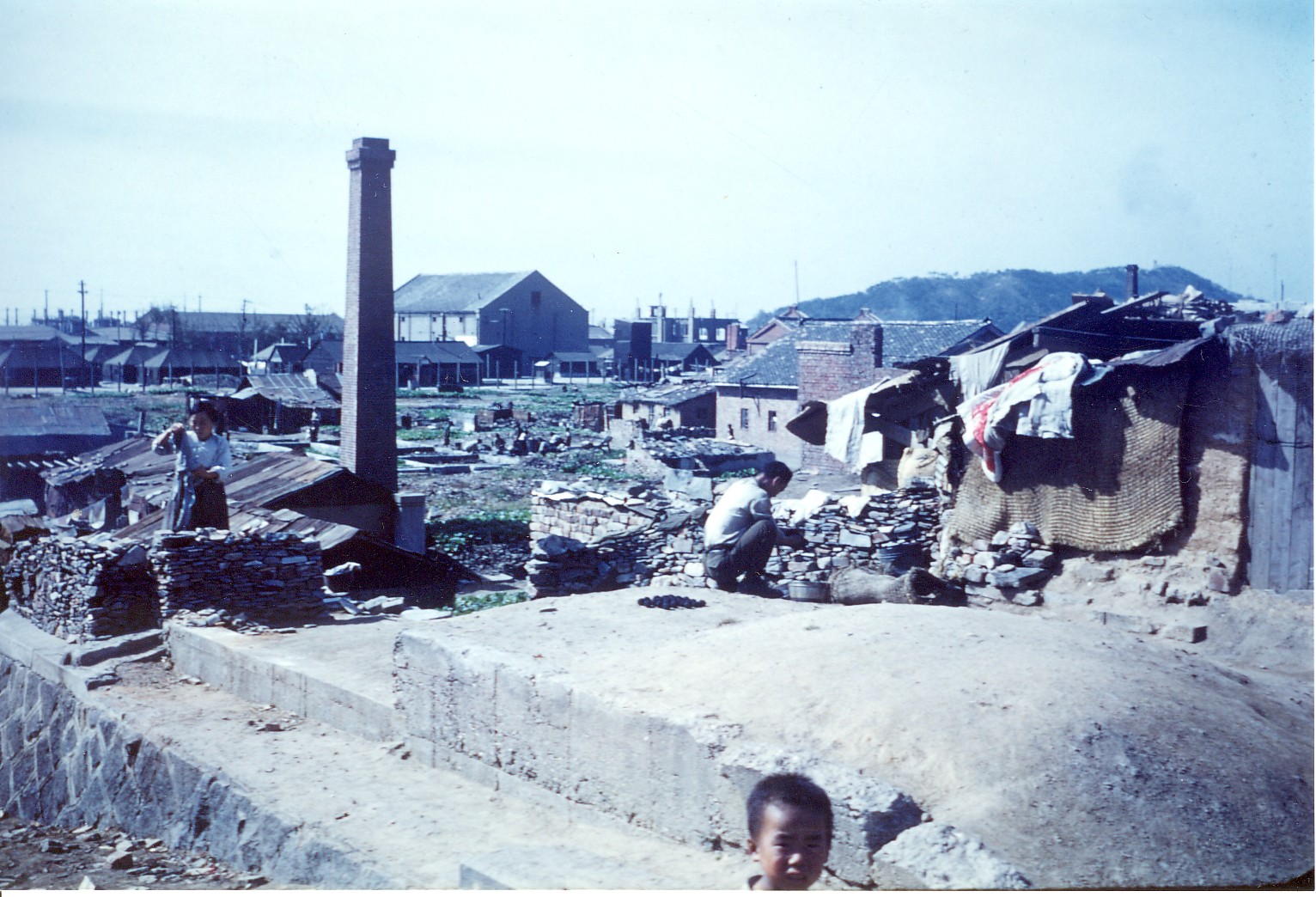
Inchon Laundry Service File: Boats at Cho-do\CB-Inchon\laundry
Operationally, the four 85-foot boats worked in pairs. R-1-654 operated with R-1-667, while R-1-664 partnered with R-1-676. Only one pair operated out of Inchon at any given time. Within each pair, one boat deployed to Cho-do for a week while the other remained at Inchon, relieving its partner on a rotating weekly schedule.
The system worked well until mishap intervened. On one occasion, R-1-676 struck a sandbar, driving a propeller strut up through the hull and forcing the boat to return to Fukuoka, Japan, for repairs. R-1-667 was sent as a replacement, but the accident required R-1-664 to remain on station at Cho-do for an additional week beyond its planned rotation. The extended deployment created an immediate problem: there were no food reserves intended for a second week.
The crew improvised. Tretter recalled that they relied heavily on aging stores of Quaker Puffed Oats cereal from their remaining 101 rations. Additional supplies were obtained through barter with Air Force radar personnel stationed on the island, trading twenty-five pounds of sugar for fresh liver. A passing British ship contributed a case of condensed milk, an unexpected luxury that helped stretch their dwindling provisions until relief finally arrived.
Milton Seagrave, another veteran of crash boat operations in Korea, later clarified Bud Tretter’s description of how the rotation system actually worked. Under normal circumstances, one pair of boats—using P-654 and P-667 as an example—would be stationed in the tidal basin at Inchon. From that pair, one boat, such as P-654, would deploy to Cho-do Island for a one-week assignment.
At the end of the week, her partner, P-667, would leave Inchon and steam north to relieve her. The two boats would spend a single night together at anchor off Cho-do, exchanging supplies, information, and often news from outside their isolated station. Early the next morning, the relieved boat would depart for Inchon, where she would refuel, take on food and water, and allow the crew access to showers before standing ready to return to Cho-do again on short notice.
Meanwhile, the second pair of boats—P-676 and P-664—was usually based at Fukuoka, Japan, undergoing maintenance or repairs in the Japanese shipyard. Once a boat there was restored to operating condition, it could be assigned emergency missions along the southern Korean coast or take up standby patrols to relieve one of the 63-foot rescue boats needing maintenance, crew rotation, or rest and recreation. Typically, one pair handled the demanding Inchon–Cho-do rotation for several weeks while the other pair underwent repairs or performed rescue duties elsewhere.
In practice, however, the neat pairing system rarely remained intact for long.
Seagrave recalled one particularly complicated sequence involving P-664. The boat entered the shipyard to receive extensive work, including installation of a new propeller shaft and strut, replacement engines, and a quad .50-caliber gun mount. No sooner had she departed the yard than she was ordered to Kunsan Air Base on Korea’s southwest coast. From there she was redirected again—this time to Inchon—to load fuel and rations before proceeding north to Cho-do to continue the rotation.
At that point, P-667 was already heading back to Fukuoka for repairs, while P-654 had just completed her week on station at Cho-do. When P-664 arrived, she relieved P-654, which then returned to Inchon and continued on to Japan for maintenance. Soon afterward, P-676 received orders to proceed to Inchon, refuel, and steam to Cho-do to relieve P-664 at the end of her rotation.
At last, the original pairing was restored. P-664 and P-676 were reunited and resumed their weekly rotations to Cho-do Island—at least until the next mechanical failure, operational requirement, or urgent order reshuffled the schedule once again.
Simple enough to follow, wasn’t it?
Bud Tretter went on to describe life and operations aboard R-1-664, a vessel crewed by fourteen Americans whose roles reflected both military necessity and the realities of long deployments at sea. Among them were four engineers responsible for keeping the boat operational, along with a cook, a medic, an armorer, the skipper and his mate, and four deckhands who handled the demanding daily work on deck. Two Korean personnel also served aboard as interpreters and houseboys, bridging language barriers and assisting with routine shipboard needs.
The boat carried 500 gallons of fresh water, carefully rationed and reserved primarily for drinking and cooking. Personal comfort was a luxury the crew could not afford; showers were simply out of the question under normal conditions. Only during the winter months did the men occasionally manage a proper wash, usually when a U.S. Navy destroyer or a British frigate allowed them access to its facilities—a rare but welcome break from the hardships of patrol life.
The 85-foot crash boats that operated during the Korean War were frequently modified to meet the demands of a new kind of conflict. One of the most notable changes involved the vessel’s armament. The original 20mm anti-aircraft gun mounted in the rear cockpit was replaced with a single .50-caliber machine gun. The 20mm weapon’s shorter effective range made it poorly suited for engaging fast-moving jets, while its firepower proved excessive for slower nuisance aircraft known as “Bed Check Charlies.” Maintaining ammunition and parts for the 20mm would also have complicated logistics and supply.
Earlier in World War II, twin .50-caliber gun mounts had been standard equipment, but these were removed at the war’s end whether boats were mothballed or sold into civilian service. In peacetime, crash boats carried no armament at all. When the Korean War began, the original twin mounts were no longer available, forcing crews to improvise. Army truck–style single .50-caliber gun rings were installed in the gun tubs instead, armed with faster-firing USAF Browning M3 machine guns rather than the older Army M2 models.
An even more formidable addition was the installation of a “quad fifty” on the forward deck. Engineers reinforced the structure by running an approximately three-inch steel pipe from beneath the deck down to the keel, fitted with a saddle at its base for stability. A heavy steel plate was then mounted on the deck to absorb the punishing recoil. Finally, the quad mount—four .50-caliber machine guns capable of firing a combined 2,000 rounds per minute—was secured in place.
Despite its anti-aircraft origins, this powerful weapon was used less for defending against enemy planes and more for offensive operations. The crash boats most often employed the quad fifty to engage armed enemy junks and suppress shore resistance during special operations, reflecting how these vessels adapted to the unconventional demands of the Korean War.
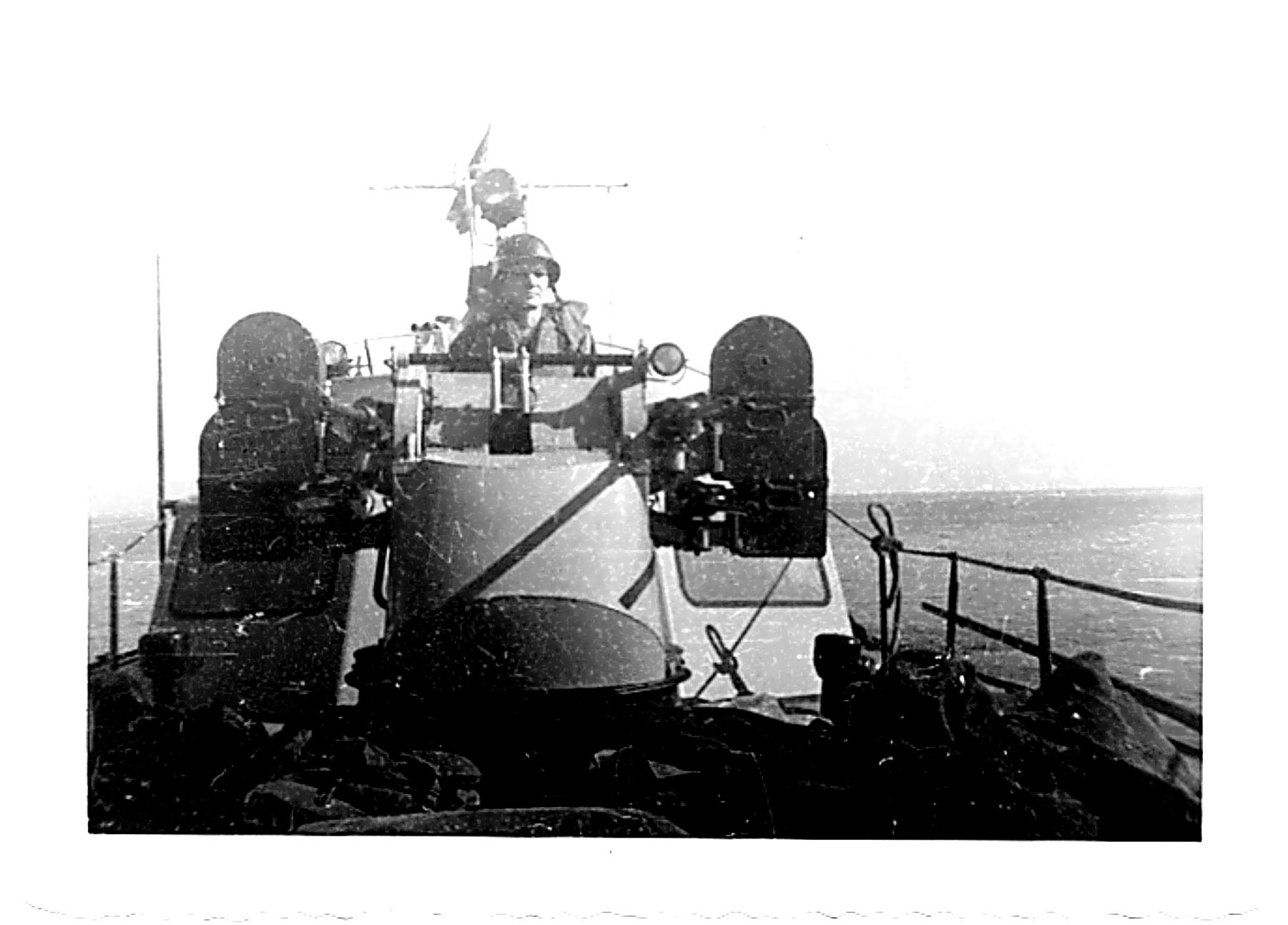
Front end of the Quad 50 Caliber File: Korea Misc\ Milton
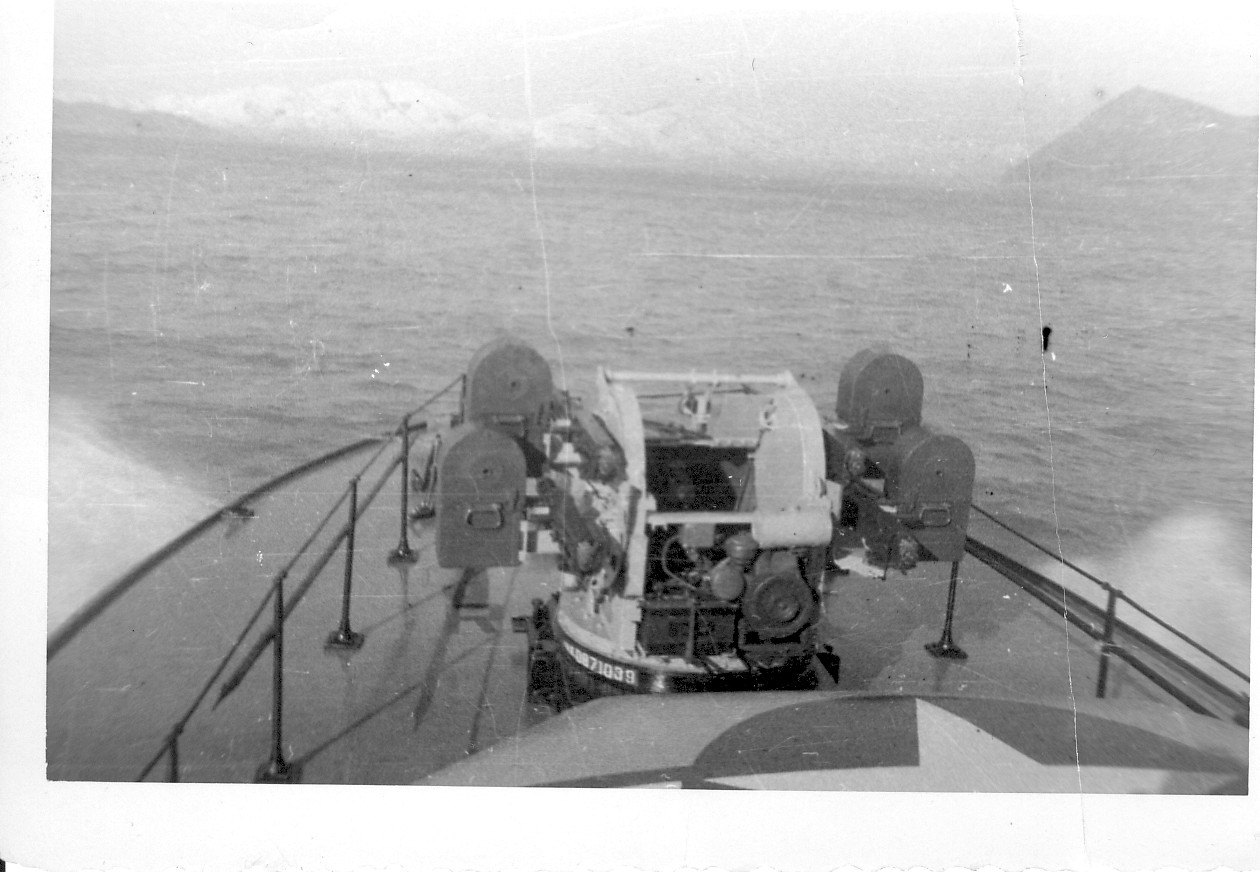
Back end of the Quad 50 Caliber File: Korea Misc\Quad
Milton Seagraves, who served as the gunner aboard R-1-664, later provided a vivid description of the boat’s formidable quad-fifty gun mount and the men who operated it. The mount, he explained, was powered by a small gasoline engine that controlled both the rotation and elevation of the guns, allowing rapid tracking of targets. It was the same type of weapon system commonly installed on Army half-tracks. The gunner operated it using inverted V-shaped hand grips mounted on a stand, while the gun sight was fixed to a crossbar directly in front of him. Quad mounts were typically installed while the crash boats underwent repairs or engine replacements in Japan. The mount aboard R-1-664 was added in late October 1952 and remained operational through April 1953.
Milton himself manned the guns, assisted by two seamen assigned as ammunition carriers. Their work was physically demanding; each “tombstone” ammunition canister weighed roughly eighty pounds and held 200 rounds. Keeping the guns supplied during an engagement required strength, coordination, and endurance.
Before joining the crash boat crews, Milton had been stationed at Itazuki Air Force Base in Fukuoka, Japan, where he worked on the flight line as an aircraft armament specialist. His duties included removing, cleaning, reinstalling, and sighting .50-caliber machine guns mounted on a range of fighter aircraft, including the F-80, F-82, F-84, F-86, and F-94. He also loaded five-inch rockets onto F-82 aircraft, gaining extensive hands-on experience with weapons systems under operational conditions.
At the same time, the Crash Boat Squadron was also based in Fukuoka. An incident there would unexpectedly alter Milton’s assignment. A crewman aboard one of the boats disassembled a .50-caliber machine gun and, upon reassembly, failed to set the headspace correctly. When the weapon was fired, the bolt lock did not engage, causing the gun to explode and send fragments of brass cartridge casings downward into the man’s legs. The accident prompted the squadron to request a trained armament specialist who could properly instruct crews in the assembly and maintenance of their weapons.
Milton, who was not in particularly good standing with his sergeant at the armament shack, was transferred to the 22nd Crash Boat Squadron. The reassignment proved well suited to his abilities. In addition to his weapons expertise, he was knowledgeable about gasoline engines, and he soon found himself assisting Japanese mechanics in overhauling the powerful Packard V-12 engines that drove the crash boats, as well as the smaller Chrysler Marine engines used in the J-boats.
His first operational posting was aboard R-1-667 at Inchon, Korea. After that vessel was damaged, he was reassigned to R-1-676 under Skipper O’Haver, serving simultaneously as armament man, gunner, and assistant engineer. Milton’s responsibilities included training crew members in the proper use and maintenance of the .50-caliber machine guns. Whenever a weapon was fired, he personally cleaned it and returned it to service, ensuring reliability for the next mission.
The boats carried an assortment of small arms in addition to their mounted weapons. Among them were carbines, M1 Garand rifles, .45-caliber “burp guns,” Thompson .45-caliber submachine guns with drum magazines, and even a 57mm recoilless rifle. That particular weapon had an unusual origin—it was taken from the office of Warrant Officer Donald “Nick” Nichols at Kimpo Airfield near Seoul. Nichols, a legendary and controversial figure within the intelligence community, supplied many of the squadron’s special operations. Known by some as a “one-man war,” he operated at the center of overlapping clandestine efforts conducted by the Army, Navy, CIA, and Air Force, often with uneven results.
Accounts such as those described in In the Devil’s Shadow suggest that Nichols’ operations were among the most effective of the war, though they came at a heavy personal cost. His life after Korea reflected those burdens; he ultimately died in a veterans’ mental hospital in Alabama, a somber reminder of the hidden toll carried by many who served in the shadowed conflicts of the era.
Although I have never had the opportunity to meet any World War II crash boat veterans in person, certain patterns have become clear through conversations and accounts passed down over the years. Many of the men who were first placed in positions of authority aboard the crash boats entered service with only the most minimal boating experience. During World War II especially, prior knowledge of the sea—whether recreational or commercial—was often limited. As some veterans jokingly recalled, if a man already knew that the “pointy end of the boat” was called the bow, he was considered experienced enough for the job.
What many of these men did possess, however, was mechanical aptitude and adaptability. A large number later pursued careers connected to mechanics, engines, or electrical work, skills sharpened by necessity while keeping complex vessels running under demanding conditions. Looking back, many veterans came to regard their time on the crash boats as the most rewarding period of their military service.
This sentiment was particularly strong among those who remained in service after the Korean War, continuing until December 1956, when the crash boat service was officially disbanded. In the years following Korea, duty assignments often shifted from combat zones to far more pleasant locations. Crews found themselves stationed in places such as Bermuda, throughout the Caribbean, and along the warm waters of the southern United States. Bases included West Palm Beach—then Morrison Field, now Palm Beach International Airport—and Tampa.
At West Palm Beach, the crash boat base sat on Peanut Island at the inlet connecting the Atlantic Ocean to the Intracoastal Waterway. Life there offered a striking contrast to wartime operations. The station maintained a 63-foot crash boat and a 57-foot yawl, and crews frequently made trips to the Florida Keys and the Bahamas. Fishing excursions and other recreational activities became part of everyday life, blending duty with moments of genuine enjoyment and camaraderie.
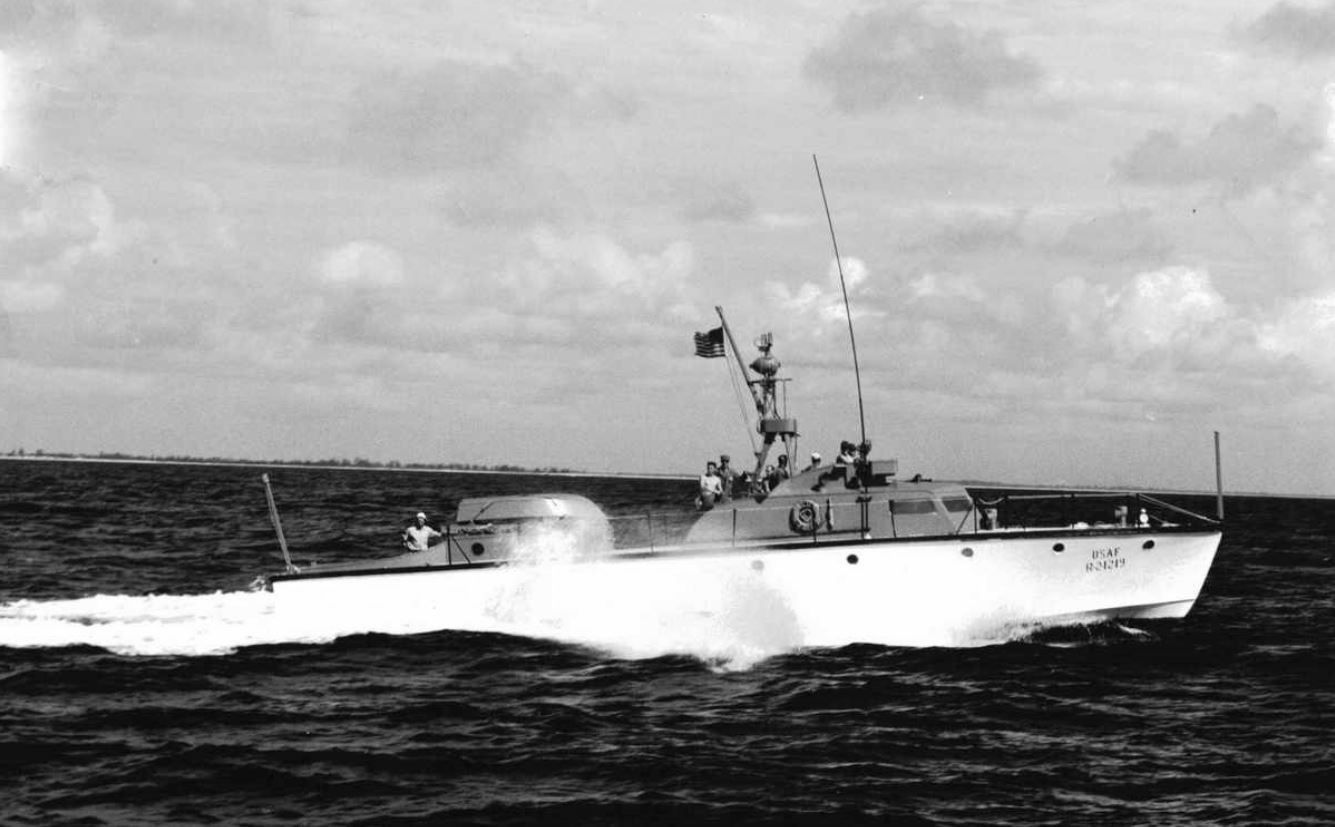
R-2-1219 at West Palm Beach
File: WPB\R2-1219
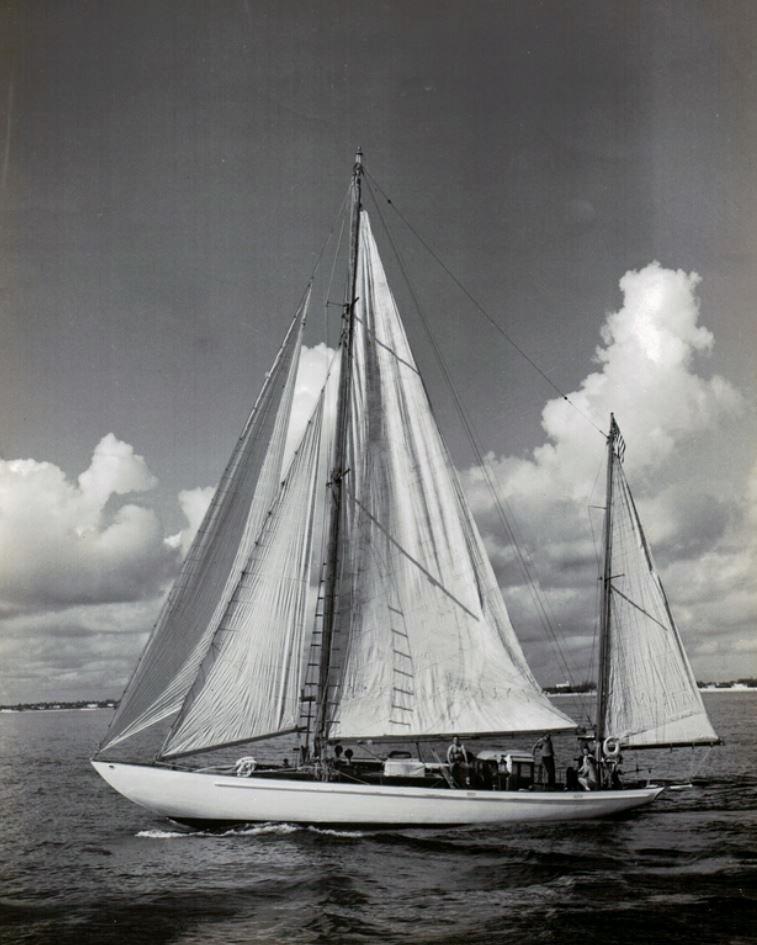
Yawl Nancy "R" Donated to the West Palm Beach base.
File: WPB\Yawl Nancy R
Yet service during the Korean War itself carried a quieter drawback. According to veteran Bob Hoffer, the constant operational tempo meant that crews rarely had time to truly know one another beyond a name and the number of the boat they served on. Encounters were brief—often little more than a wave in passing before heading back out to sea. “We were like ships in the night,” he later reflected. Only decades later, at reunions and gatherings, did many of the men finally have the chance to sit together, share stories, and enjoy one another’s company for more than a fleeting moment—a connection delayed by nearly forty years.