Class Five - Under 40 Ft. Crash Boats
File: Swamp Glider Folder, swamp glider image
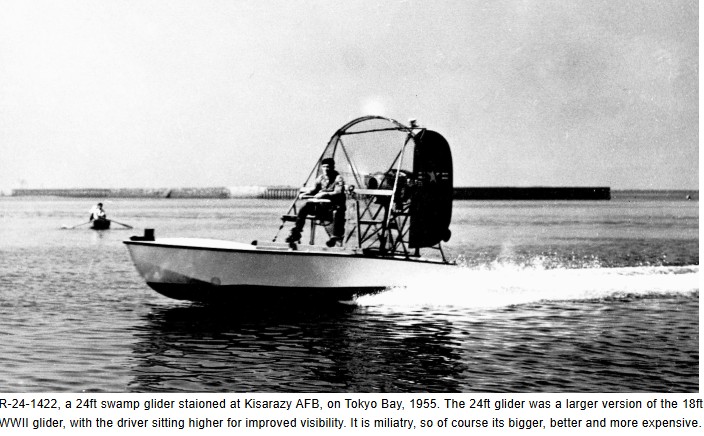
Although each length was a separate design, they were considered to be one basic group. During World War II, the Army Air Forces (AAF) utilized a fleet of 353 specialized, shallow-draft inland rescue boats, ranging from 18-foot "Swamp Gliders" to 38-foot rescue boats, to support pilot training along the Gulf Coast and in Florida. Among these, the "Swamp Glider" (airboat) was developed from 1930s Florida civilian designs to navigate inaccessible marshes, with Paul Prigg Boat Works producing over 100 of these aircraft-propelled craft for the AAF. The design, which proved crucial for rescuing pilots from impenetrable, shallow environments, utilized flat-bottomed hulls with no submerged moving parts, allowing for navigation through marshes, bayous, and in a few situations, icy northern waters.
The development of inland rescue craft represents a fascinating intersection of civilian innovation and military necessity. Following the Second World War, the U.S. Army Air Forces (and later the USAF) standardized a fleet of shallow-draft vessels to manage the treacherous marshes and bayous of the Gulf Coast, where training accidents were frequent and the terrain nearly impenetrable for traditional hulls.
While larger rescue boats—ranging from 24-foot Chris-Craft designs to 38-footers—handled inland waterways, the most specialized tool in the inventory was the "Swamp Glider" or Airboat. Designated as "SG" boats rather than the standard "P" (Power) boat classification, these 18-foot craft were essential for navigating the Florida Everglades and Louisiana bayous.
The 22 ft. boat was a Chris-Craft civilian design. About 1950 the USAF started designating these as R-4-*** boats. Assorted small boats of 38 feet and under were used in inland waters:
| Boat Type | Design Number | Number Built | Length |
| 38 ft Rescue Boat | 388 | 48 | 38’ |
| 36 ft Rescue Boat | 382 | 102 | 36' |
| 31 ft Rescue Boat | 387 | 30 | 31' 10" |
| 22 ft Rescue Boat* | 326 | 60 | 24' |
| 18 ft Swamp Glider (Airboat) | 415 | 113 | 18' |
| TOTAL | 353 |
The military airboat’s lineage is a patchwork of early 20th-century experimentation. The concept traces back to Dr. Alexander Graham Bell’s 1905 Ugly Duckling in Canada and early WWI-era efforts by Farman Aircraft. In the United States, the design was refined by Florida pioneers like Glenn Curtiss and local hunters like Johnny Lamb and the Yates brothers. By the time these craft entered military service, they had evolved into the iconic flat-bottomed design we recognize today: propelled by aircraft engines and protected by metal safety cages to prevent catastrophic injuries from the whirling propellers.
A key figure in this procurement history is Paul Prigg of Miami. A boat builder and pilot, Prigg successfully lobbied the AAF on the strategic value of the Swamp Glider. He argued for stationing these craft in remote, "out of the way" locations to ensure rapid response times for downed airmen. Records indicate Prigg Boat Works was likely the sole contractor for the initial production run of 113 units (SW-1 through SW-113).
File: 55 exp\63 Sample Yard\36 ft
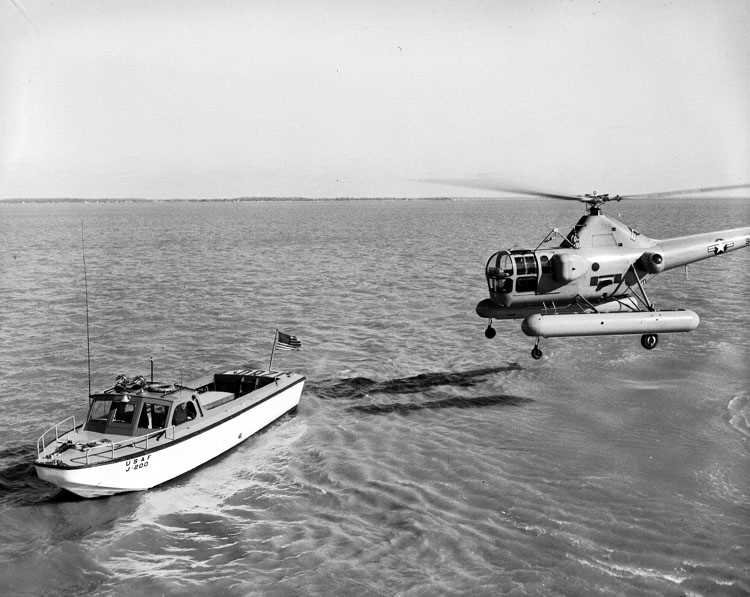
Crash boat J-200 and a YH-5A helicopter of the 32nd Crash Rescue Boat Flight
The 36‑foot crash boat owed much of its lineage to an unlikely ancestor: the early Higgins 36‑foot LCPL, the “Eureka” landing craft that predated the famous bow‑ramped LCVP. These early Higgins boats shared the same basic length and hull form—shallow‑draft, fast, and highly maneuverable—and it is no surprise that the crash boats built by Higgins closely resembled this design.
When Higgins Industries shifted production to the newer LCVP model, the military appears to have taken advantage of the transition. It is highly probable that most of the LCPL‑style hulls already moving down the production line were diverted and converted into crash boats, repurposing a proven design for air‑sea rescue work.
Though the Navy maintained its own inventory, including the 34-foot Kermath “Sea Raider” powered crash boat, the Air Force’s R-4 series and Swamp Gliders remain the definitive examples of how "backwoods" technology was weaponized for life-saving missions in the most unforgiving environments on the home front.
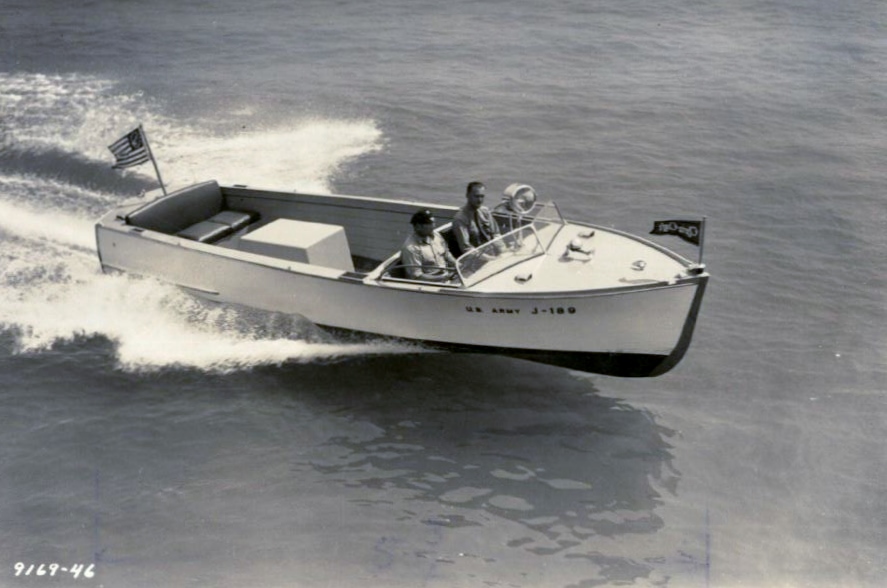
The above photo is identified as a Chris-Craft 22 ft. rescue boat, and the same boat is identified as the 24 ft. rescue boat. The difference may be length overall vs. length at the waterline. The back of the photo dates it as 1941, although the label on the negative suggests 1946. Photo courtesy of the Chris-Craft Collection, Mariners Museum File: 22 ft\C-C 1 frt