History & ERBS Numbers
In 1921 two guys watched a fabric covered WW I vintage jenny bi-plane flying over the Chesapeake Bay near Langley Field when suddenly the engine started popping and sputtering and then quit altogether. The pilot desperately tried to glide to shore, but just didn’t have the altitude to make it and crashed in the water a short distance from shore. One of the men turned to the other and they decided to row over and pull him out of the water. The pilot was saved by the first ever air-sea rescue (crash) boat.
It turns out that the above story isn't true. At the very least the date isn't. The March, 1916 issue of Pacific Motor Boat has a story about the "U.S. Aviation Corps Fast Hydroplane Pronto". According to the story, "Pronto" was owned by the U.S. Army and used as a tender and ambulance for the aviation school on North Island in San Diego Bay. This 20 ft. hydroplane had a top speed of from 35 to 47 mph, according to various sources. To read the one page article, click here.
Early in the twentieth century, fast motorboats were being produced in the U.S. and Europe. An inverted -V design called the "sea sled" seemed very promising and the U.S. Navy bought between forty and fifty for use as rescue boats before WW I. In 1921 a 35-foot sea sled set a speed record of just under 58mph. Variations of the "sea sled" design continued in development or testing through the early 1950s. In fact, the experimental 55 ft. rescue boat of the mid-1950s appears to be of the "sea sled" design. Development of high-speed launches by the navy continued through the 1930s, as well as by civilians such as Gar Wood, John Hacker (Hacker-Craft) and Chris Smith (Chris-Craft) and various rumrunners. Several Hacker-Craft runabouts were used as rescue boats in the mid-1930s, at least one of which was stationed at the Charleston Air Station. The Hacker-Craft on the right may be a modified 29 ft. "Dolphin" model but documentation is lacking. Dart Boats of Toledo, Ohio modified at least 4 of their 26 ft. launches to the Navy for rescue boat service. In both cases the forward cockpit full-width bench seat was replaced with a half-width seat, which made enough room to carry a litter in the forward cockpit. The experience with hull shapes and construction techniques would later prove useful for both PT boats and rescue boats in WW II. It is a classic military strategy to modify civilian designs while dedicated military designs were being developed. In the early 1930s the navy discontinued using the term "crash boat" in favor of "aircraft rescue boat" and the army appears to have gone to "air-sea rescue boat". However, by the time of the Korean War the USAF had resumed using the shorter term "crash boat'.
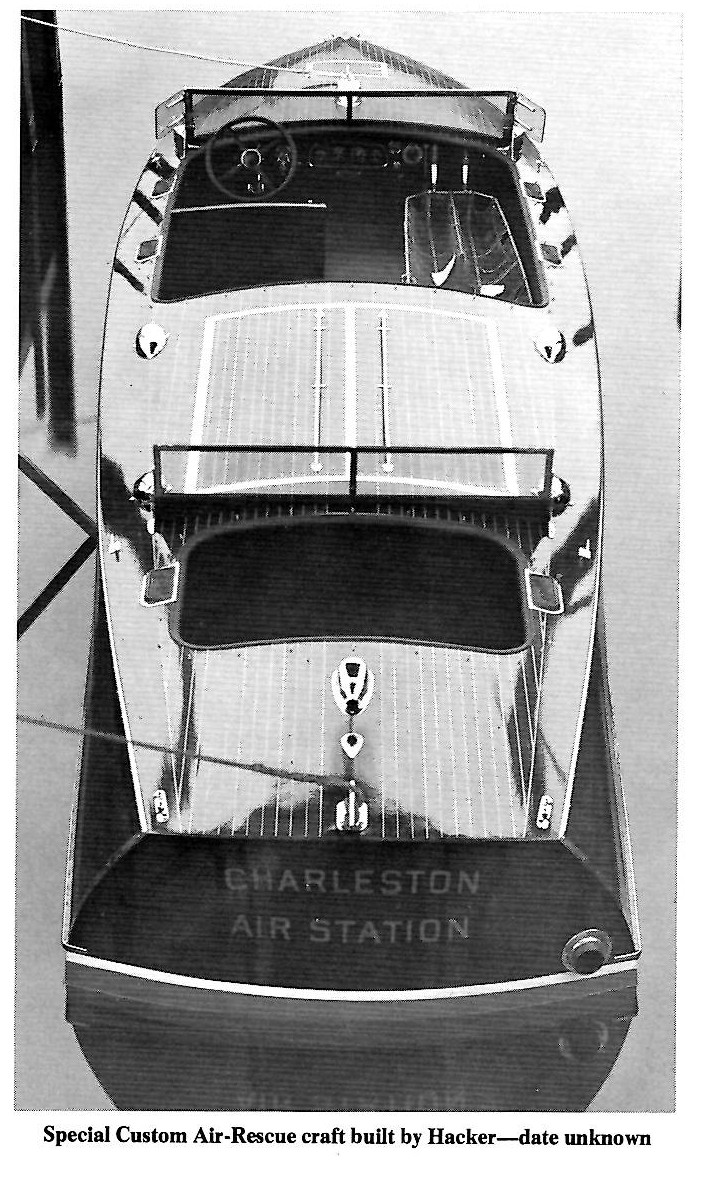
File: Hacker Rescue Boat 29 ft
During WW II the boats were commonly referred to as Air Sea Rescue Boats or Emergency Rescue Boats and those manned by US Army Air Force personnel were organized into Emergency Rescue Boat Squadrons (ERBS). They were officially designated Air Rescue Boats (ARB). However, that abbreviation was known to many as a Battle Damage Repair Ship, a classic "acronym collision.". By the time of the Korean War the boats were manned by USAF personnel and the terminology changed to Crash Rescue Boat Squadron (CRBS).
Emergency Rescue Boat Squadrons
| 1st ERBS | Boca Raton, FL then sent to the Mediterranean |
| 2nd ERS | No boats, OA-10A Catalinas assigned to the 5th Air Force in 7/44 |
| 3rd ERS | No boats, 12 OA-10A Catalinas assigned to the 5th Air Force |
| 4th ERS | No boats, OA-10A Catalinas assigned to the 20th Air Force |
| 5th ERBS | Assigned to 8th Air Force (no boats), then sent (with boats) to the Pacific 7/45 |
| 6th ERBS | Assigned to the 5th Air Force in the Pacific, Okinawa |
| 6th CRBF | Bermuda during the 1950s. |
| 7th ERBS | Assigned to 10th Air Force in India, transferred to Okinawa 8/45 |
| 7th CRBF | Wheelus AFB Tripoli, Libya |
| 8th ERBS | Based in the Mediterranean., apparently overlapping the 1st ERBS |
| 9th ERBS | Keesler Field documented May through July 1945, Reactivated 1951 England |
| 10th ERBS | Alaska and all the Aleutian Islands, to the Kurile Islands |
| 11th ERBS | Southeastern U.S. & Eastern Caribbean. |
| 12th ERBS | Western Caribbean, covering all of Panama and surrounding waters of the Pacific, and part of S. America. |
| 13th ERBS | Hawaii (previously the 927th Quartermaster Boat Company (AVN) |
| 14th ERBS | Assigned to the 5th Air Force, along with the 2nd ERBS in the Pacific |
| 15th ERBS | Assigned to the 13th Air Force in the Pacific. |
| 15th CRBF | West Palm Beach, FL in 1950s. |
| 22nd CRBS | Korea, Japan, and the Pacific during the Korean War. Later: 1st CRBF |
| 23rd CRBF | Brookley AFB, Mobile Alabama, 1950s |
American crash boats were a vital part of US military aviation for about twenty years but were always the “redheaded stepchild” of both the Army and later the USAF. The helicopter finally rendered them obsolete when it developed the lifting capacity and the reliability required for the job. Crash boat service was not the place to be if you were looking for promotion opportunities during either WW II or Korea. Since they were not part of the core mission of the bases to which they were assigned, they were not of much concern to most base commanders and operated somewhat out of the chain of command. In both the Army Air Force and later the USAF, the way to get promoted was to fly, plain and simple. To a large extent crash boaters were an unsupervised operation and thus unrewarded. One crash boater, to give an example, was stuck as a T/SGT for fourteen years. When he switched to SAC he made Chief Master Sargent very quickly. The skipper of one Korean War crash boat, Bob Frankovich, when asked about the availability of promotions responded, “Nil”. His Korean experience pretty well matches that of my father during WW II.
The United States Army Air Force (USAAF or AAF) used boats for rescue work for several years prior to WWII, but these were local efforts by commanders at bases located near water, such as Mitchell, Langley, Hickham, etc. They saw the need to have some kind of vessel available to recover downed aircrew. After the Battle of Britain, well in advance of the Japanese attack on Pearl Harbor, the US Army sent a team to Britain to study the experiences of the British rescue boat program and report on Royal Air Force (RAF) methods etc. The team was impressed by the RAF use of high speed launches, manned by RAF crews, to rescue airmen in the water. When the report was sent back to Washington, General Henry H. Arnold, then Chief of the Army Air Corps, immediately requested that the US War Department provide the AAC with a similar water rescue capability at Air Corps bases with over water traffic patterns. Under his personal guidance the air-sea rescue program was initiated, crews trained, equipment procured, and units established. The effect on air crew morale was most rewarding, with crews knowing that there was an opportunity for rescue after ditching. There was also the savings in manpower, time and expense in replacing experienced crew, which became more evident once we were in the war and were able to bring an overhwhelming number of pilots to battle. Most senior military and civilian leaders knew that the Atlantic and Pacific Oceans would no longer protect us from international events.
In order to protect the vital shipping lanes along our east coast and the Caribbean, including the Gulf of Mexico, the U. S. government exchanged mostly obsolete, surplus World War I era destroyers for leases to establish military bases at the British territories of Newfoundland, Bermuda, The Bahamas and its Caribbean territories of St. Lucia, Jamaica, Trinidad, Antigua, and British Guiana. Many of these bases became bases for AAF air sea rescue boats during World War II.
In 1941 the AAF was poorly prepared, in terms of either experience or equipment, to meet its need for rescue operations at sea. Within the limits of its own resources the US Navy readily assumed responsibility in areas of its primary jurisdiction for the rescue of Army as well as Navy fliers, not wanting the AAF to further develop its own rescue capability. In the UK and European Theater in late 1942 there was a formal agreement between the RAF and the US 8th AAF not to duplicate air-sea rescue resources. This agreement for a time also encompassed areas in the Mediterrean including North Africa, India and Burma. Later in the war we operated rescue boats in all of these areas, some by the Office of Stratigic Services (OSS).
After several high level meetings and conferences with the US Navy and Coast Guard, the Army was authorized to undertake the mission outlined by General Arnold. The Navy did not want the AAF to operate its own crash boats but wanted them to depend on the Navy to rescue crashed AAF pilots. At another time during negotiations the Navy wanted to pass responsibility in U.S.. coastal waters to the Coast Guard. The USCG simply was unable to furnish the coverage, equipment, personnel, and quick response required for air sea rescue over such a large area. Generally speaking, inside the continental U.S. boats tended to be assigned to a particular airfield and did not get re-assigned very often.
As a side note, there have always been inter-service rivalries, but the rivalry between the US Navy and the US Army Air Force was particularly intense, at least among senior officers in Washington, DC. This dates back, at least, to the demonstration (Feb., 1921) arranged by Gen. Billy Mitchell to prove that even battleships could be sunk by aircraft, an idea that the Navy had denied until that time. The Japanese verified it again at Pearl Harbor, although with torpedoes in addition to bombs. Fortunately, the rivalry did not extend to the personnel in the field; the troops on the front lines were more interested in saving each other than their commanders in Washington seemed to be.
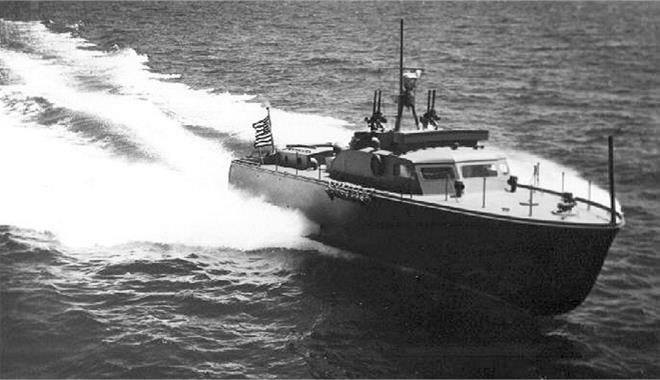
File: 63\BS135343
The AAF wanted the responsibility and assets for recovery of its own pilots. They wanted the shortest line of communication to the boat skipper and did not want to be in the position of having to contact another service, especially the Navy, to rescue AAF pilots at the Navy's “earliest convenience”. Radio communication in the rescue process remained a problem throughout Word War II.
High level planning for air-sea rescue operations did not get under way until late 1942 although air-sea rescue operations had been going on in some form for months. Discussions among the Joint Chiefs of Staff (JCS) finally led to a letter dated 23 July 1943 that concluded that each service should be primarily responsible for rescue of its own aircrews. In addition, it recommended that a central coordinating body be established for the assembly and dissemination of information concerning research, development, and design of air-sea rescue equipment, as well as methods, techniques and rescue procedures. It was the summer of 1943 when AAF planning for air-sea rescue on a world-wide basis had reached the point that definite recommendations could be made.
At the start of WW II the Army Air Corps rescue operations were assigned to the Water Transport Division (ATC) of the Army Quartermaster Corps. On July, 31,1942 the Army Transportation Command assumed responsibility and in late 1943 the Army Air Force took responsibility and organized the boats into Emergency Rescue Boat Squadrons. Tracking boats and personnel through these changes is confusing. Documenting crash boat contributions to the war efforts in both wars is complicated by the fact that boat commanders were to turn over their log books to the base commander where they were assigned and the commander only needed to retain them for a year. So, other than the memories of those who served on them, records of their accomplishments, hardships, and especially the “special ops”, are very limited. In contrast, the navy kept the log books of PT boats, which are of similar size, and today we still have good records of which boats, under who's command, were where and when, in addition to detailed descriptions of their missions.
It should be pointed out that the boats were only a part of air-sea rescue operations. Aircraft played an equal, if not greater role. The amphibious PBY, Catalina, or OA-10 as the army referred to the plane, was the most common. Although dated, some would say obsolete even at the beginning of the war, it remained in production throughout the war. Unfortunately, Vickers of Canada, the producer of the army version, made unauthorized changes that significantly weakened the aft section of the aircraft according to official AAF documents. When combined with insufficient training of army pilots in water operation, poor maintenance, and a lack of spare parts, the performance of the aircraft was significantly degraded. For a very detailed history of the development of air-sea rescue during World War II see Scott Davis's website scottdavis61.com
Zone of the Interior
Boats assigned to the continental U.S. were all in the “Zone of the Interior” although the chain of command of these boats came under frequent reorganization. At a high-level conference in August, 1944 there were proposals to standardize procedures, clarifying various agency responsibilities and which numbered air force was responsible for given geographic areas. However, the First Air Force, which covered the Atlantic coast south to South Carolina objected to areas west of the Appalachians. They felt a strong interest in the Savannah-Charleston region which was under the control of the Third Air Force. The Third felt that their area of responsibility was too large as it covered from Georgia to Texas, the whole southeastern U.S. and flying conditions led other air forces to schedule training missions in their area. The Fourth Air Force, which covered the west coast, offered no objection but the Second thought the individual base commanders should maintain control of rescue operations for their base.
A large Navy and Coast Guard presence along the north and mid-Atlantic coast made an extensive AAF organization unnecessary. One source states that the Navy had ten 63ft. boats and seven 104 ft. boats. The seven 104s seems unlikely as that was an Army design. It is more likely that they had several of the 110 ft. minesweepers, which are similar in size and appearance. The Coast Guard had 41 lifeboat stations in that area.
The Third Air Force had the largest area and the most training bases. They developed a plan where the area was divided into four regions, each with a control center, responsible for all rescue operations within its assigned area, coordinating activities of both boats and planes during and incident. In 1943 there were approximately 60 boats available from Charleston, SC to Corpus Christi, TX, including Coast Guard boats. The vast majority were AAF boats. In addition, there were two boats stationed in the Bahamas.
European, Mediterranean, and CBI Theaters
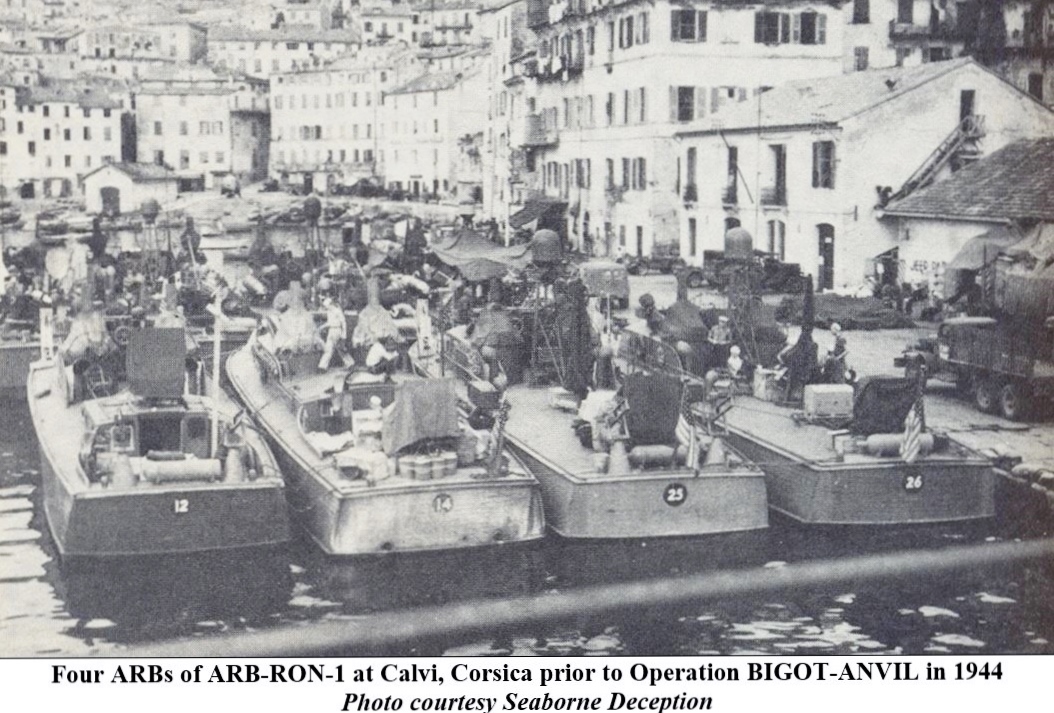
File: CB\Spec Ops\OSS Corsica
The British had primary responsibility for rescue operations in European, Mediterranean, and CBI (China, Burma, and India) Theaters of Operation although the AAF did have some relatively minor role. By 1943 an American presence in the Mediterranean was built around a few OA-10s but operated under the control of the RAF and supported the invasion of Sicily and operations out of northern Africa. The 1st ERBS, commanded by Lt. Col. Littlejohn Perdue was a composite Group (boats and planes) and was in theater by late 1943 or early 1944. It remained in theater and active throughout the Mediterranean until the end of the war. The 8th ERBS was based in the Mediterranean Sea and conducted operations from North Africa to Italy. Missions, especially clandestine operations across the Adriatic Sea in the area of German occupied Yugoslavia. The OSS was using crash boats either assigned to them or temporarily loaned to them by either the AAF or Navy. Further operations included laying smoke on invasion beaches in support of allied operations and are covered in the Non-Standard Operations button on the left side of the screen and in the OSS photo album in the Photos & Missions section.
In the CBI theater I have come across information regarding OSS operations from James Gray and Phil Garn, authors of Warboats, 55 Years of Naval Special Operations Warfare, Combatant Craft History. They provided information on operations and the boats involved in "special operations" for the OSS Maritime Unit. They inserted OSS combat divers who sank Japanes cargo ships, among many other operations a few of which are covered in the two sections sited above.
Pacific Theater
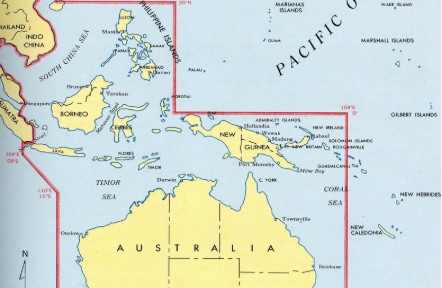
Early on, the Pacific Theater of Operations was primarily a Navy operation, although the Army had primary responsibility for the Southwest Pacific, operationg out of Australia with Navy support. The Navy and Marines were responsible for combat operations in the Central Pacific, (the Marshalls, Marianas and Carolines) where there were vast amounts of water with only an ocassionsl tiny group of islands. Later they turned the captured islands over to the Army after they were more or less secured. Often an entire island was not secured, but just enough of it to provide space for an airfield. Initially most aircraft flights were off carriers or Marine air fields on the islands. However, the AAF did play a significant role in the Pacific as the war progressed, but because of the large expanses of water and the long distances between crash boat bases, it was not always practical to use crash boats, especially in the Central Pacific.
Delivering the large boats to overseas units proved a difficult problem. To save the wear and tear of a long, rough voyage under their own power, they were shipped as deck cargo on larger vessels. Such passage was not always easy to arrange, for there was a constant shortage of deck space, and some overseas ports lacked the large cranes necessary for handling such heavy loads. One of the challenges of organization in the Pacific was that the bases were continually moving as we advanced toward Japan, Early on, each boat was assigned to a base and once a boat was assigned to a base, the base commanders did not want to let the boat move on as the front moved north; they wanted to keep them as personal fishing boats, etc. This was solved by attaching the boats to a numbered air force rather than an airfield. Then the boats moved with the planes. In Europe the bases tended to be more permanent, which made organization not easy, but easier. In the end, there were more rescues in the Pacific than in Europe since most flights were over water for extended periods.
The 5th and 13th Army Air Forces were active in the Southwest Pacific, from Guadalcanal, New Guinea, the Celebes, Borneo, and up to The Philippines and operated crash boats throughout the area, saving many air crews. During the first year of the war there were no AAF rescue operations in the Southwest and Central Pacific, although the Navy was rescuing flyers during that time. In early 1943 the Fifth Air Force Emergency Rescue Service was established on New Guinea in the Southwest Pacific. When Major John H. Small, Jr., arrived in theater in late 1942, there was no rescue organization but widespread interest in its benefits. With one assistant he began to direct search and rescue operations with whatever resources he could borrow from the RAF for about six months until he received either two or four (sources conflict) OA-10s. By April of 1944 his cobbled together group had completed 455 rescues. In July of 1944 the 2nd ERS & 14th ERBS arrived in theater, assigned to the Fifth Air Force and within six months had rescued 300 airmen. Shortly after that the Thirteenth Air Force received its own 15th ERBS. When these units were combined with air crews to form composite groups they became much more effective. Between September, 1944 and April, 1945 the 5230th and 5270th composite groups were formed in the area with about 60 boats. Their role increased significantly after the arrival of the B29s in theater with their very long flights to bomb Japan combined with their engine overheating issues.
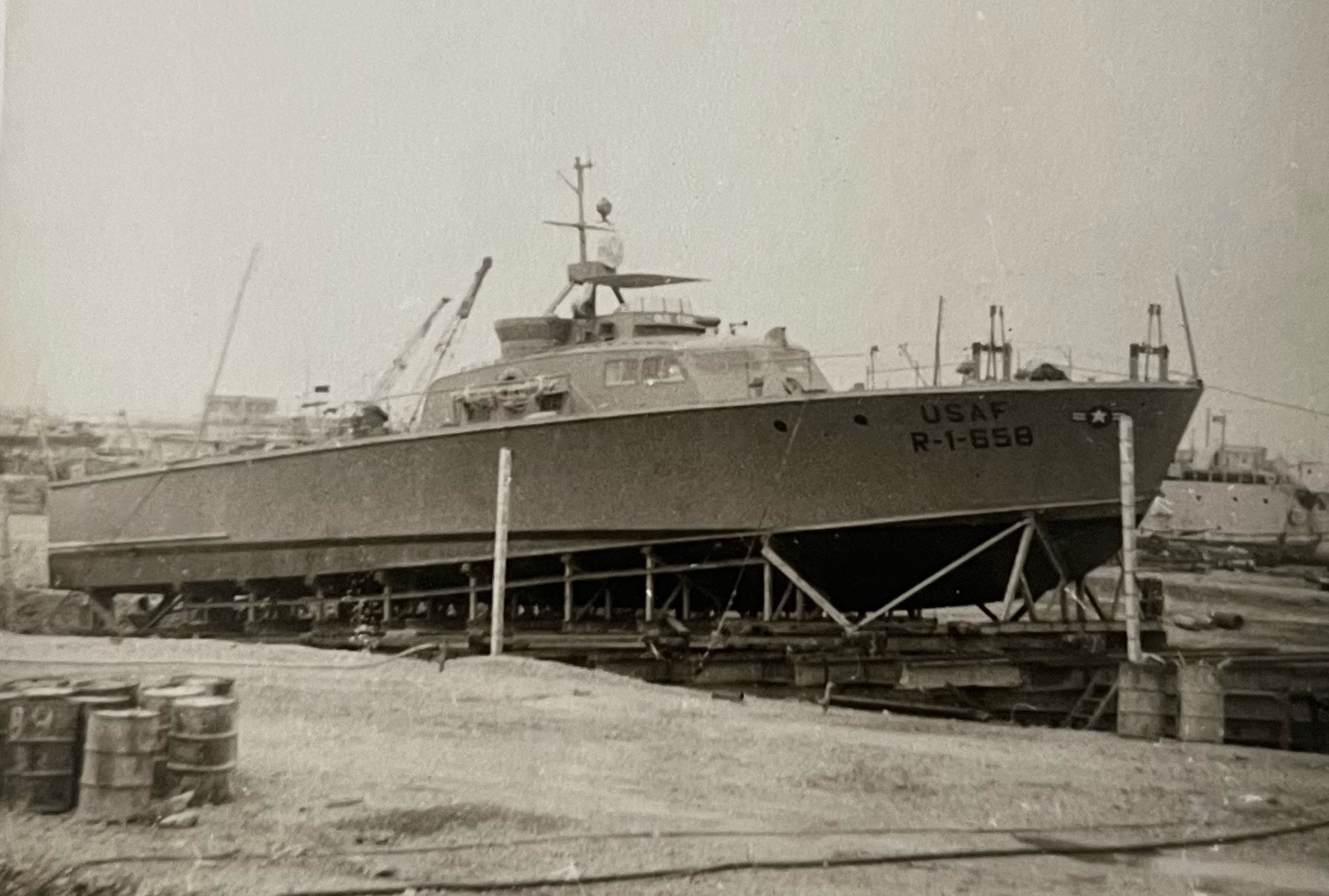
Although from the postwar era, this photo shows the proper way to cradle a crash boat. For towing the cradle to the lifting point, the boat and the cradle were secured as a single unit with multiple braces across the deck and moved to the crane as a unit by the crash boat. File: 85\R-1-658 Naha
Delivering the large boats to overseas units proved a difficult problem. To save the wear and tear of a long, rough voyage under their own power, they were shipped as deck cargo on larger vessels. Such passage was not always easy to arrange, for there was a constant shortage of deck space, and some overseas ports lacked the large cranes necessary for handling such heavy loads. One of the challenges of organization in the Pacific was that the bases were continually moving as we advanced toward Japan, Early on, each oat was assigned to a base and once a boat was assigned to a base, the base commanders did not want to let the boat move on as the front moved north; they wanted to keep them as personal fishing boats, etc. This was solved by attaching the boats to a numbered air force rather than an airfield. Then the boats moved with the planes. In Europe the bases tended to be more permanent, which made organization not easy, but easier. In the end, there were more rescues in the Pacific than in Europe since most flights were over water for extended periods.
The 5th and 13th Army Air Forces were active in the Southwest Pacific, from Guadalcanal, New Guinea, the Celebes, Borneo, and up to The Philippines and operated crash boats throughout the area, saving many air crews. During the first year of the war there were no AAF rescue operations in the Southwest and Central Pacific, although the Navy was rescuing flyers during that time. In early 1943 the Fifth Air Force Emergency Rescue Service was established on New Guinea in the Southwest Pacific. When Major John H. Small, Jr., arrived in theater in late
1942, there was no rescue organization but widespread interest in its benefits. With one assistant he began to direct search and rescue operations with whatever resources he could borrow from the RAF for about six months until he received either two or four (sources conflict) OA-10s. By April of 1944 his cobbled together group had completed 455 rescues. In July of 1944 the 2nd ERS & 14th ERBS arrived in theater, assigned to the Fifth Air Force and within six months had rescued 300 airmen. Shortly after that the Thirteenth Air Force received its own 15th ERBS. When these units were combined with air crews to form composite groups they became much more effective. Between September, 1944 and April, 1945 the 5230th and 5270th composite groups were formed in the area with about 60 boats. Their role increased significantly after the arrival of the B29s in theater with their very long flights to bomb Japan combined with their engine overheating issues.
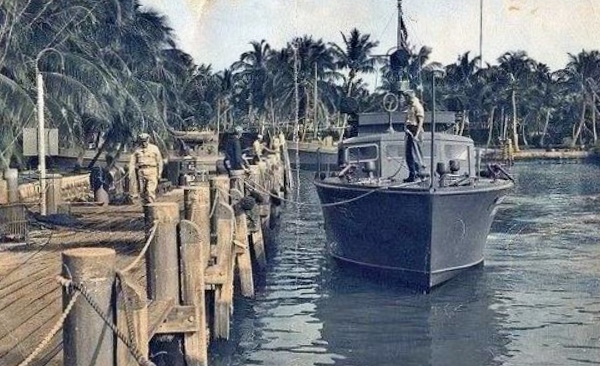
The family of Bud Waggener, skipper of P-401 a.k.a. Gung-Ho, has provided me with a copy of his autobiography covering his time in the SWPA, which is in the Manuals & Publications section. His photo album covering the same period is in Photos and Missions. An excellant book covering the same area and time period is Crash Boat, Rescue and Peril in the Pacific During World War II by P-399 skipper Earl A McCandlish and George D. Jepson. I have used some of the best parts elsewhere on this website. Both were assigned to the 15th ERBS.
File: 63\14640
In spite of the competitive nature of inter-service meetings in Washington early in the war, at an operational level it was realized that inter-service cooperation was essential to success of rescue operations in the Pacific Theater. Rescue operations often involved using PBY amphibious aircraft, which had their own shortcomings, in combination with the rescue boats, and “Dumbo” and “Super Dumbo” bombers to search large areas and to drop life rafts or small motorized lifeboats to the survivors until they could be picked up by subs or surface ships. Often, crash boats were based near airfields or would be assigned a more distant area to patrol when large numbers of planes would be passing through an area. It was not long after they arrived in theater that commanders also put them to use as fast supply boats for critical parts or equipment, and added special intelligence gathering operations. The care and supplying of the many coast watchers spread throughout the islands was a substantial portion of both crash boat and PT boat duties. Special operations remained a significant part of their role as long as they remained in the Pacific Theater, including the Korean War. Some Korean War vets maintain that over half of their missions on 85 footers were special ops. The AAF exchanged some of its relatively slow (18 knots) 104-foot rescue boats for 63-foot high-speed Navy craft, which Gen. Hap Arnold obtained from Admiral King. The 104s were valuable to the Navy as minesweepers. In late 1944 and early 1945 the AAF began to receive their newly designed 85-foot air sea rescue boats.
Based on a history of “Air-Sea Rescue 1941-1952” prepared by the USAF Historical Division - Air University 1953, I think it is fair to say that there was an institutional bias, without any malicious intent implied, that favored the role of OA-10s (PBYs), Dumbos and helicopters at the expense of the crash boats. While crash boats are mentioned in the history, their contributions are minimized while the contributions of aircraft to rescue at sea are featured. The report re-enforces the argument that in the USAF, at least during the crash boat period, “If it doesn’t fly, it doesn’t matter”. In the history’s coverage of the Korean War no mention of crash boat missions is made at all, while the exploits of helicopters rate considerable reportage. In the fifteen photos and illustrations that appear in the re-publication of the book in 2013, there is only one photo that includes a portion of a crash boat and it is not the subject of the photo.
As the end of the war approached, plans for the invasion of Japan called for new efforts to increase rescue forces and to co-ordinate even more effectively the rescue activities of both the AAF and the Navy. The 5th ERBS was scheduled for re-deployment from ETO to the Pacific. The 6th ERBS was assigned to the Fifth Air Force, which stationed part of the squadron on Okinawa in July. In August two flights of the 7th ERBS were transferred to Okinawa from India, where they had assisted the RAF emergency service and especially the Office of Special Services for the past few months. There was even a plan developed to blow-up the Kanmon Tunnel in Japan with 85' crash boats ( see Non-Standard Applications on the left side of the screen). On 5 August representatives of AAF Headquarters and of the Fifth, Seventh, Thirteenth, and Twentieth Air Forces conferred in Manila. Agreement was reached for publication, after co-ordination with Admiral Nimitz, of instructions that would standardize all procedures in rescue operations during the coming invasion. My father’s temporary duty in the Pacific was extended specifically so that he could attend as part of the AAF Headquarters delegation. But the next day the first A-bomb was dropped on Hiroshima.
The situation had been expected to change dramatically with the invasion of Japan as there would have been AAF planes operating out of bases close to Japan. Japan has many miles of coastline and it was anticipated that many damaged planes would ditch not far off the coastline where crash boats could be most effective. Japan was expected to be heavily defended and losses in personnel and aircraft were expected to be extremely high.
Radio communication seems to have been a major issue, especially in the Pacific Theater, with some boats having no radios, and both aircraft and boats operating on multiple, but different frequencies. This resulted in messages having to be relayed through multiple commands when time was of the essence.
At the end of WWII, Lt. Gen. Hoyt Vandenberg, Asst. Chief of Air Staff for Operations, declared all boats over 45’ to be “excess” and that the USCG was to take over all open ocean rescues. The USGC got much of the army fleet but the navy acquired fifteen of the AAF 85' crash boats as well as eighty-seven of the 104s. Yet five years later, the USAF was scrambling to get their hands on all the 63 and 85 footers they could get for use in Korea. In late 1945 the air sea rescue operations were renamed to the Air Rescue Service (ARS). Their Headquarters was moved three times in the first seven months of 1946. This was a period of turmoil for the service as the military shrank and the role of the rescue service was questioned. In December of 1946 Col Richard T. Kight took over command of ARS and was tasked with either building it up or shutting it down. Fortunately he became a strong supporter and pushed for expansion of the service and its budget. In spite of the declaration that boats over 45 ft. were excess, many of the larger boats remained in the ARS until the fall 1956, although the focus was definitely on helicopters. The last crash boats, 44 footers, built for the USAF were built by Simms Brothers of Dorchester, MA in August of 1956. The Navy continued to use crash boats in a variety of roles (see Non-Standard Applications on the left side of the screen) before decommissioning the last of them in the late 1960s or early 1970s.
U.S. Coast Guard
During the latter stages of World War II and into the immediate postwar period, the United States Coast Guard (USCG) received a number of 63-foot crash rescue boats transferred from both the United States Navy (USN) and the Army Air Forces (AAF). These vessels were deployed primarily along the coasts of the United States and consisted largely of Model 314 and Model 416 craft, although additional variants were also included.
Many of these boats were diverted directly from ongoing USN and AAF production programs. When vessels originally intended for Navy service were reassigned, they generally retained their existing USN hull numbers. Boats constructed to the AAF’s dedicated Model 416 design, however, lost their original “P” or “Q” designations and were instead assigned Navy hull numbers in the C-77*** series, which bore no relationship to their earlier identifiers.
British authors Dave Linley and Terry Holtham, in their book Crash Boats, provide important clarification regarding the transfer and renumbering of 63-foot crash boats. Their research indicates that vessels began transferring from the United States Navy to the Coast Guard in late 1944, at which time the Coast Guard introduced a new vessel numbering system.
Under this system, hull numbers began with the prefix CG, followed by two digits indicating vessel length. A third digit identified the design origin, while the final two digits served as the individual hull identification number. Boats transferred from the USN, or the Army Air Forces were typically assigned a “0” in the design position. Vessels based on externally developed designs used the digits “1” or “2,” whereas digits “3” and higher were reserved for craft designed by the Coast Guard itself.
Various sources differ regarding the total number of 63-foot crash boats transferred to the United States Coast Guard. Most documented hull numbers fall within the range CG-63018 through CG-63105, suggesting a theoretical total of eighty-eight vessels; however, gaps in surviving records indicate that this figure should be regarded as an estimate rather than a confirmed total. Administrative complexity further complicates identification, as a single hull could carry as many as four different designations during its military service, including builder’s, Army Air Forces, Navy, and Coast Guard numbers, making record-keeping errors common.
Assignment to a 63-foot crash boat was widely regarded as preferred duty and was typically reserved for experienced personnel, often those who had previously completed overseas service. Crews were generally commanded by an ensign and consisted of four seamen, three engineers, a radio operator, and a pharmacist’s mate. Coast Guard–operated boats frequently carried equipment not standard on comparable Army or Navy crash boats, reflecting their expanded rescue role. Such equipment often included wet suits, asbestos firefighting suits, blood plasma supplies, basic diving apparatus, and oxygen equipment intended to support rescue and medical operations.
The 63-foot and 85-foot rescue boats had relatively brief service lives in Coast Guard service. Most were retired by the end of 1947, largely because their Hall-Scott gasoline engines were widely regarded as excessively fuel-consuming in the postwar period of sharply reduced Coast Guard budgets. As the service downsized following World War II, many surplus vessels were transferred to civilian organizations, including the Sea Scouts of the Boy Scouts of America, where they were used for training and youth maritime programs.
Also present in the Coast Guard fleet were approximately 165 thirty-eight-foot picket boats constructed by Palmer Scott & Co. of New Bedford, Massachusetts. Hull numbering indicates that these vessels were a Coast Guard design rather than transfers from Navy or Army programs. Although transferred to the Navy in 1946, they are not included in this study’s database because no evidence has been found that they served as crash boats. The rationale for their transfer remains unclear, particularly given the Navy’s simultaneous disposal of many wooden vessels while transferring 63-foot rescue boats to the Coast Guard.
USAF Era Starts
Following the establishment of the United States Air Force in 1947, most Army Air Forces assets were transferred to the new service, including its fleet of marine rescue craft. After consolidation, these vessels were formally cataloged under a standardized identification system. Technical Order No. 19-85-16, titled Re-designation & Identification Survey of All Air Force Marine Equipment, established a new hull numbering scheme intended to improve administrative control, identification, and standardization across Air Force marine units.
The system assigned each vessel an alphabetical prefix indicating operational role, followed by numerical identifiers denoting design type and individual serial number. The prefix “A” identified airborne rescue equipment, “R” designated waterborne rescue craft, and “U” indicated utility boats. A numerical type designator followed the prefix, and a final serial number served as the vessel’s new Air Force hull number, bearing no relationship to earlier Army or Navy designations. While this Technical Order gave the boats a formal place in the USAF catalog, it also cemented their fate. By categorizing them alongside "Airborne" equipment, it reinforced the idea that the boats were only valid as part of a "Search and Rescue" ecosystem—one that was increasingly dominated by the helicopter.
| Designator | Category | Primary Example |
| A-1 | Airborne Rescue | Higgins 27' "Flying Dutchman" Lifeboat |
| R-1 | Waterborne Rescue (85') | 85-foot ASR (e.g., R-1-664) |
| R-2 | Waterborne Rescue (63') | 63-foot Crash Boat (e.g., R-2-699) |
| R-3 | Waterborne Rescue (104') | 104-foot Rescue Boat |
| U | Utility Equipment | Re-fueling launches, target towers, etc. |
For example, the designation R-2-699 identified a waterborne rescue craft (“R”), belonging to the Type-2 category of 63-foot boats, with “699” representing its assigned serial number. The ordering of categories within the Technical Order suggests that the Air Force placed particular emphasis on rescue equipment, which appeared first in the classification scheme. Airborne lifeboats were grouped under the designation A-1, with serial numbers ranging from 1 through approximately 650.
A1 type Airborne Lifeboats laid up at Clark Field, Philippines in 1946 File: Airborne Lifeboats a-1
The A-1 airborne lifeboat represented an American development derived from earlier British designs by naval architect Uffa Fox. Measuring 27 feet in length and weighing approximately 3,000 pounds, it was developed by the Higgins Industries company in collaboration with Major Robert Rizon, commander of the rescue school at Keeler Field. Both the B-17 aircraft that carried the lifeboat and the boat itself were reportedly nicknamed “Flying Dutchman” in service.
The 1950s served as the "twilight of the wooden hull" for the Air Force. The shift in terminology to Air Rescue Squadron in 1950 was the final bureaucratic signal that the maritime-specific identity of the "Crash Boaters" was being absorbed into the broader aerial mission.
By the time the Rescue Boat Flights were shuttered in 1956, the transition from boats to helicopters was complete. The boats were no longer seen as lifesavers for downed pilots, but as industrial tools for the Cold War's burgeoning missile and torpedo programs.
File: CB\63\AVR-ROW-at-AMR
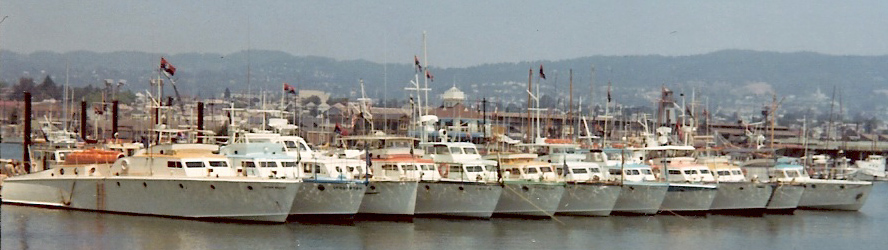
the Sea Scouts, part of the Boy Scouts of America, became responsible for the operation and maintenance of these vessels in seaworthy condition. The photo above shows about 11 Sea Scout AVR's tied up at Coast Guard Island, Alameda, CA. Eventually, due to the increased maintenance that comes with age, and the fact that a 63' boat is a large boat for a group of teenagers to maintain, the boats were retired, one way or another. Some were converted to yachts, fishing boats, work boats and ferries while others were simply abandoned.
Rescue Boats in Film & TV
Occasionally, I receive questions about rescue boats in movies and television shows. To my knowledge, there has never been a major film or TV show specifically focused on air-sea rescue boats. However, some productions have used crash boats to stand in for PT (patrol torpedo) boats, primarily during the 1960s when authentic PT boats were rare. After World War II, most PT boats were overseas, especially in the Pacific, and not returned to the U.S. — many were destroyed at places like Samar Bay in the Philippines. A few that remained stateside were sold as surplus, but genuine examples were scarce.
Feature Films
They Were Expendable” (1945) is a notable film supported heavily by the Navy. It was filmed in Florida, with actual U.S. Navy 80-foot Elco PT boats used, re-numbered to match the late 1941-early 1942 fleet. Because the film was shot shortly after WWII, real PT boats were available, and no rescue boats were necessary. Naval aircraft from nearby stations also doubled as Japanese planes.
Certainly, the most famous movie was PT-109, the film of President Kennedy’s disaster while skippering a PT boat in the Pacific. Warner Bros, the producers of the movie, used 85 ft. crash boats to represent the 80 ft. Elco PT boats in the movie. This movie was heavily controlled by the Kennedy family and thus portrayed the president in a very positive manner, in spite of his boat being the only PT boat ever bisected by a Japanese ship during the war. I am not certain as to how many crash boats were used in the movie but think it was less than five. The most I noticed in a single shot was three. There is very little documentation on the rescue boats used but they were probably located along the Florida and Alabama coats. Much of the movie was filmed at Little Palm Island (formerly Little Munson Island), now a resort in the Florida Keys. Power and fresh water were run out to the island for the film, allowing the resort to be built years later. When the set was being built for the film, it sparked rumors that another U.S. invasion of Cuba was in the works. Boats in the movie are painted standard AAF grey although the actual PT boats were painted a green camo. One usually reliable source lists three of the 85' boats as P-428, P-507 and P-508. The 85 was very similar to the 80 ft Elco and was thus fairly easy to modify to closely resemble the Elcos.
TV Series and Reenactments
McHale’s Navy was a comic TV show that ran from 1962 through 1966 that was filmed in B&W and portrayed a mythical PT boat base in the Pacific during WWII. Three boats were used to represent the PT-73 in the show. One actual PT boat was for underway shots at sea and two 63-ft World War II Army Air Force Sea Rescue boats were reconfigured to resemble a PT boat were used for some of the static shots. The PT-73 was actually a 71-foot type II Vosper MTB (motor torpedo boat), a British design built in the U.S. for export to the Soviet Union. The boat was sold to the studio where they did a remodel, reconfiguring the Vosper 694 and the two air sea rescue boats (numbers unknown thus far) to resemble a World War II-era PT boat.
The movies McHale’s Navy (1964) and McHale’s Navy Joins the Air Force (1967) probably used the TV boats for the first move. For the second movie, which I have not seen, according to authors Linley and Holtham, C-26685 and C-9443 were used. C-9443 was the boat blown-up early in the movie and was powered with a novel outboard motor installation hidden in the engine room. C-26685 was powered with two model 8V72 Detroit Diesel engines which were customized to propel the boat to an impressive 40 to 45 miles per hour. Once movie production was complete, the engines were removed and sold. The information on the engines comes from Paul Renner, who is associated with the Sea Scouts.
Sea Hunt was an adventure type TV series that ran from 1958 through 1961. The hero was Mike Nelson, played by Lloyd Bridges. Crash boat C-26684 was used for many episodes but was replaced by a 33ft boat late in the series.
Other Notable Mentions
Hawaii Five-O was a TV series that ran from 1968 through 1980 set in Hawaii. It was a police series starring Jack Lord as Steve McGarrett and James McArthur as Danny Williams. The series ended when they finally captured the chief of the bad guys, Wo Fat, who lived on a luxury boat, which was actually the 63ft rescue boat C-18368. In 2002 she sank in Honolulu.