Overview of the Boats
Our nation developed broadly five types of "Crash Boats" based on range and speed. The largest crash boats were called the "104s" indicating their one-hundred and four-foot length and frequently referred to "Class I" boats. The 104s had the greatest range but were, relative to enemy small boats, slow.
The next crash boat was known as the "ASR-85s" standing for Air Sea Rescue and indicating its 85-foot length These boats are often referenced as "Class II" boats in reports. The ASR 85s enjoyed both range and speed and therefore considered by most crews to be the most effective crash boat design. Its range allowed it to rescue flyers downed several hundred miles offshore.
For near coastal and an intermediate offshore range there was the “AVR-63” or "Class III" (Auxiliary Vessel, Rescue. sixty-three feet long). The AVR-63 possessed great speed with intermediate range. This boat was originally designed on speculation by Miami Shipbuilding Corp. for the Navy, for their resale to the Union of South Africa.
The last two vessel types were limited to near shore and inland waterways. They were recreational boat designs repurposed for war time use. The 42 ft. boat was twin screw, designed by Owens Yachts as Design 221 and built by both Owens and Chris Craft, although Chris Craft primarily built Higgins boats - LCVPs. The last type consisted of other assorted vessels thirty-five feet and under
Some sources also reference exceptions that don't fit the five broad categories such as the 72 and 83 ft. boats and were in only limited production. There were two different designs of 83-foot boats and most were built for the Coast Guard. A different design was built for the USAAF but only a few were built as they were generally considered too slow for rescue work. The 83-footer story began in 1940 when the first of 230 cutters was built for the USCG. The wooden cutters were used for convoy duty in the Gulf of Mexico and anti-submarine warfare (ASW) patrol off the east coast of the U.S. Sixty cutters participated in the Normandy invasion as RESFLO 1 where they rescued 1,437 men and one woman (a nurse). They were also known as the Matchbox Fleet. Fifty-four cutters were sent to the South Pacific for various duties and as rescue craft for the invasion of Japan. There were also 72 ft. boats ordered in 1940 with 600hp engines, but again, most of the 195 were assigned to the USCG. For more detail on the two designs, see the 83 ft. album in Photos & Missions
At the time that the five basic types were determined, it was anticipated that they were to be used at air bases on all three coasts of the continental US, the Great Lakes, several other inland lakes, especially near air crew training bases, and at overseas bases in Alaska, Hawaii, and locations in the Caribbean. Service in The Southwest Pacific Area was not anticipated.
Crash Boats By Class
104 ft. Crash Boats
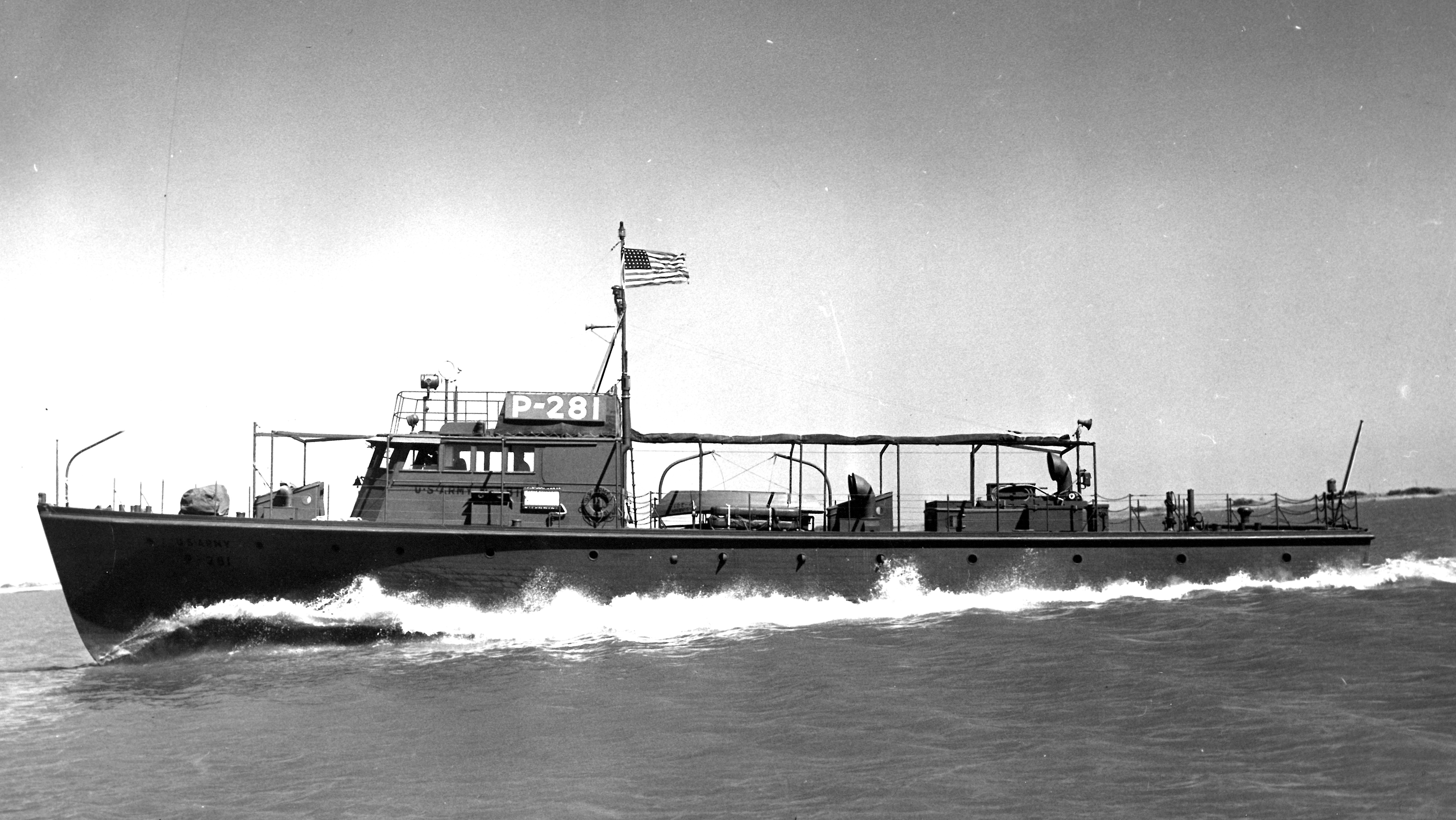
Designed by Benjamin Dobson of Fair Harbor, Massachusetts just before the outbreak of World War II, the 104‑foot rescue boats represented the most ambitious class of U.S. Army Air Forces crash boats. Known during the war as “Class I” boats, they were praised for being comfortable, well‑equipped, and capable of treating up to twenty‑three patients in a fully stocked onboard dispensary. In practice, space allowed for seventeen litters, but the medical facilities were still unmatched among rescue craft of the era. Their longer hulls and displacement design gave them a steadiness in rough seas that smaller rescue boats lacked, allowing them to remain on station for extended periods.
85 ft. Crash Boats
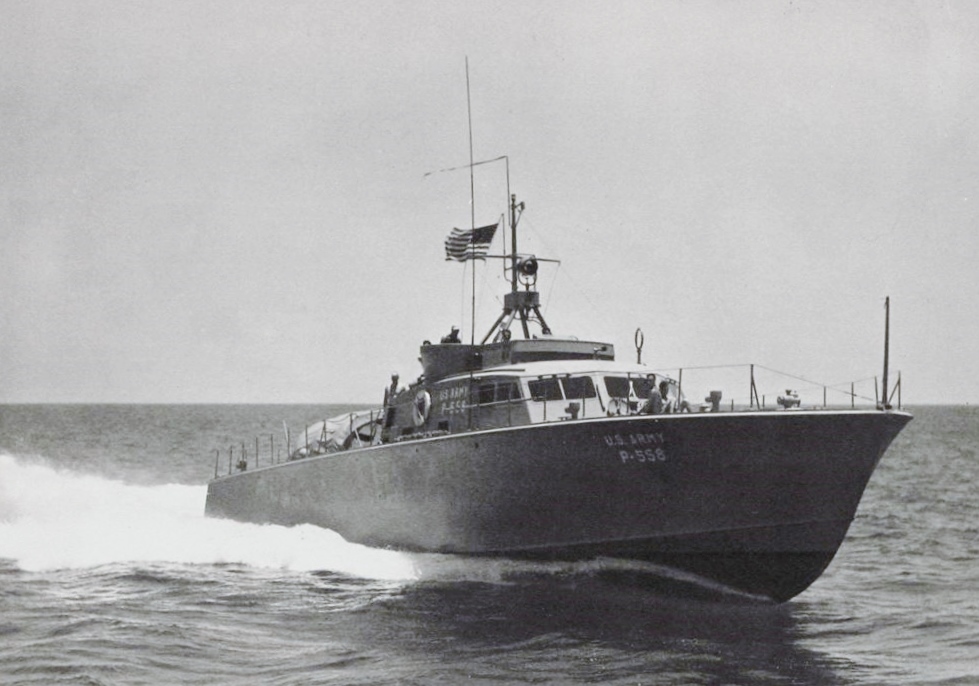
Among the rescue boats developed during the war, the ASR‑85s stood at the top of the hierarchy. Often referred to as “Class II” boats, they were considered the ultimate expression of the Army Air Forces’ rescue‑boat program. Their designer, Diar Long, had already proven his skill with the successful 63‑foot AVR. When the Quartermaster Corps approached him for a vessel faster than the 104‑footer, larger than the 63, and capable of crossing oceans, Long essentially scaled up his earlier design. The result was the sleek, powerful 85‑footer, delivered to the AAF in 1944 and 1945. In real‑world rescue operations, their range of roughly 800 miles translated into an operational radius of about 400 miles.
63 ft. Crash Boats
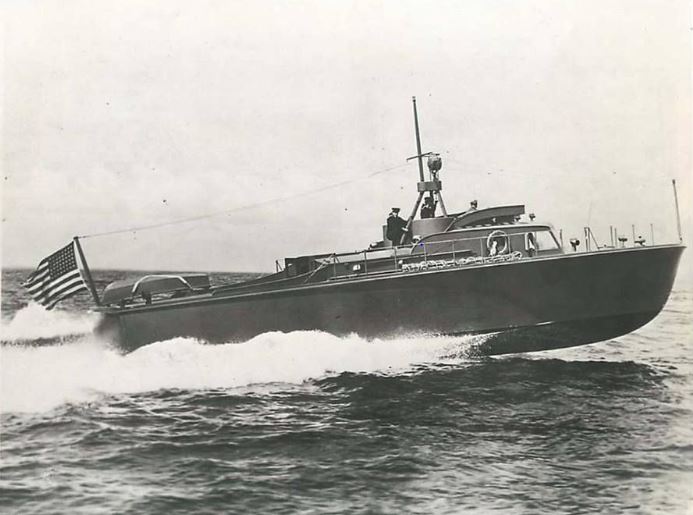
The 63-foot Aircraft Rescue Vessels—designated AVRs—formed one of the most remarkable classes of high-speed rescue craft built during World War II. The Miami Shipbuilding Corporation, founded in 1939 and formerly known as Fogel Boat Yard, received the first US Navy contract for the construction of small, fast and lightly armed "Crash Boats" in its first year of existence. Most of the information in this section comes indirectly from Jean E. Buhler (1917-2012), Chief Technical Officer of Miami Shipbuilding Corporation. His older brothers, Theodore and Paul, were president and treasurer respectively. Their father Emil was also an owner but not involved in day-to-day operations.
40, 42 & 45 ft. Crash Boats
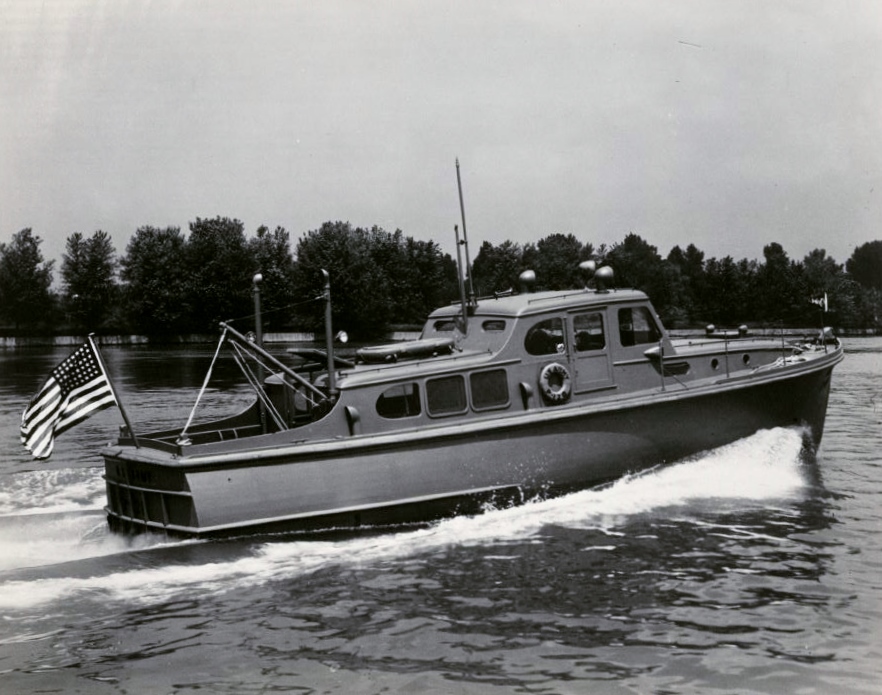
Design 385 and 221 – 45 & 42ft boats for use in inland and coastal waters were Class 4 boats. Their combined total production was 163 boats. They were recreational boat designs drafted for war time use.
The 42 ft. boat was twin screw, most sources indicate that it was designed by Owens Yachts as Design 221 and built by both Owens and Chris Craft, although Chris Craft primarily built Higgins boats. There are two sheets at the Mariners' Museum dated 1941 and credited to "Marine Design and Construction / Quartermaster Corps, U.S.A. One sheet shows the lines and offsets while the other shows the sections. While the boat was most likely a civilian design, the drawings may include modifications for military use. Most, if not all of these boats, were produced in 1941 and 1942.
Smaller Crash Boats
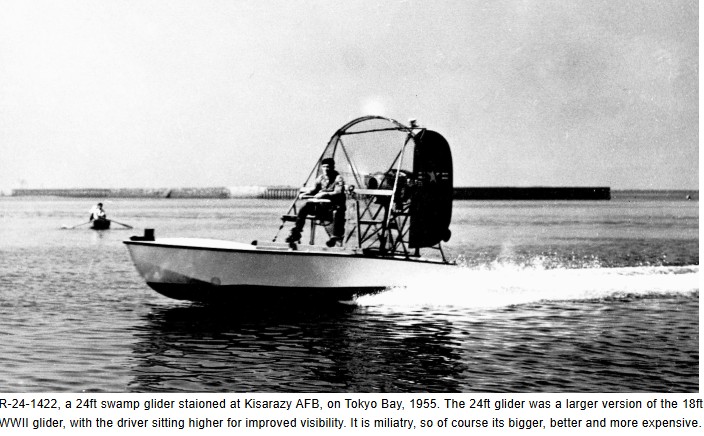
The development of inland rescue craft represents a fascinating intersection of civilian innovation and military necessity. Following the Second World War, the U.S. Army Air Forces (and later the USAF) standardized a fleet of shallow-draft vessels to manage the treacherous marshes and bayous of the Gulf Coast, where training accidents were frequent and the terrain nearly impenetrable for traditional hulls.
While larger rescue boats—ranging from 24-foot Chris-Craft designs to 38-footers—handled inland waterways, the most specialized tool in the inventory was the "Swamp Glider" or Airboat. Designated as "SG" boats rather than the standard "P" (Power) boat classification, these 18-foot craft were essential for navigating the Florida Everglades and Louisiana bayous.
Design & Construction
Both the 63-ft. and 85-ft. boats used the same construction methods, as the designer, Dair Long, essentially scaled the 63-footer up to 85 ft. The Navy carved the hull number (C-***) into several structural members—such as the keelson and stem—in addition to painting it on each vessel
The Army, however, did not carve the number into the hull. Instead, it relied solely on painted hull numbers, which has made tracking these vessels in later years more difficult. The reasons for this difference are unclear, though they may reflect variations in procedure or experience.
In addition, all U.S. Army and Navy small craft carried an identification plaque, typically about 4”×6”, located in or near the pilothouse. This plate listed the vessel type or model, hull number, year launched, design number, manufacturer, and the branch of service for which the boat was built. The Army also installed a Bakelite (an early plastic) plate in the engine room. Plate designs varied not only between manufacturers but sometimes even within a single manufacturer’s production.
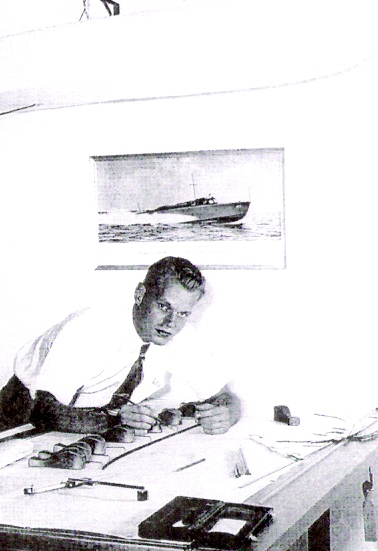
The stem, keel and chines were made of Honduras mahogany double-rabbeted to receive the inner and outer planking individually. The stem, knee, forefoot and two keel sections were scarfed and bolted. The chines were made up in three pieces and scarfs were located between the keel scarfs. The structural watertight bulkheads were hollow, being built up of two layers of 1/4-inch fir plywood separated by 1-3/8-inch spruce stiffeners. The bulkheads were attached to the keel and chines with metal angle clips. The transom stiffeners and boundary framing were made of Honduras mahogany. After the keel, bulkheads, molds between the bulkheads and transom were set up, spruce stringers, spaced one foot apart, were fastened into notches provided in the bottom and sides of the bulkheads and clamped to the temporary molds. These stringers were effectively the “ribbands” of a normal building form except that they became a permanent part of the boat. Steam-bent white oak transverse frames, 1-1/8-inch X 1-3/8-inch were placed inside and outside of the stringers. Intercostal tiller blocks of spruce were fitted and screwed in place through the oak frames making each frame an “I-section.”.” The intersections of frames and stringers were then through bolted. A shelf and clamp of spruce were then fitted and fastened at the sheer. Knees and gussets of 3/8-inch fir plywood were fitted and screw fastened to both sides of the frames at the sheer and chine.
Before the boat was planked, the engine beds, which were prefabricated built-up box girders with oak runners, plywood sides and internal vertical and diagonal spruce bracing, were slipped into place through the transom framing and bolted though each frame. Together with the keel and chines, the engine beds formed the main strength members of the bottom of the boat.
The boat was double planked and had eight-ounce cotton duck laid in marine/aviation glue between the two layers of planking. The inner planking, which was cedar, 1/2-inch thick on the bottom and 7/16-inch on the sides, ran at 45 degrees diagonally. The shipwrights screwed the inner planking to the keel, chines, and sheer clamp, then fastened it to the frames by means of copper nails. The outer planking of Honduras mahogany, was ¾-inch thick on the bottom and 9/16-inch thick on the sides, and ran longitudinally. The outer planking fastened through the inner planking into the frames with bronze wood screws. The inner planking fastened to the outer planking with wood screws between the frames from the inside. They nailed the 3/4-inch fir plywood decking with Monel anchor-fast nails to the 1-3/8-inch spruce deck beams, and screw fastened it to the shelf and clamp. The seams and butts were bolted on seam straps and butt blocks. The plywood was then covered with 12-once canvas, laid in white lead paste-paint. The deckhouse structure was made of 3/4-inch fir plywood with mahogany trim.
The electrical system was a 24 volt DC system that ran off the four, six volt batteries supplied for each engine. The system could be supplied with 110 volt AC shore power from a receptacle on the port side of the bridge and fed through a rectifier before charging the batteries. The lighting system used standard marine fixtures with gasketed glass enclosures with additional wire mesh guards in the engine room.
For much more layout and construction detail, as well as photos, see the book Crash Boats, by Dave Linley & Terry Holtham, as well as the Manuals & Publications section of this site.
85' & 63' Crash Boat Specifications
| Description | 85 ft. Model 379 | 63 ft. Model 168 | 63 ft. Model 314 | 63 ft. Model 416 |
| Production Run | 140 | 16 | 352 | 79*** |
| Length Overall | 85' | 63' | 63' | 63' |
| Length at Waterline | 78'10" | 58' 10" | 58' 10" | 58' 10" |
| Max (Over Guards) Beam | 20' 3" | 15' 6" | 15' 6" | 15' 6" |
| Beam at Waterline | 18' 8" | 13' 10" | 13' 10" | 13' 10" |
| Depth Amidship | 11' 2" | 8' 9" | 8' 9" | 8' 9" |
| Draft (to Propeller Tips) | 4' 8" | 3' 10" | 3' 10" | 3' 10" |
| Displacement, Light | 70,500 lbs. | 37,000 lbs. | 38,000 lbs. | 38,000 lbs. |
| Displacement, Full Load | 103,712 lbs. | 50,500 lbs. | 51,500 lbs. | 51,500 lbs. |
| Fuel Capacity | 3840 gal. / 4 tanks | 2,000 gal. / 3 tanks | 1580 gal. / 2 tanks | 1580 gal. / 2 tanks |
| Octane Rating | 87 - 100* | 87 - 100* | 87 - 91* | 87 - 91* |
| Lube Oil | 70 gal. / 2 tanks | 70 gal. / 2 tanks | 50 gal. / 2 tanks | 50 gal. / 2 tanks |
| Fresh Water | 500 gal. | 150 gal. | 150 gal. | 150 gal. |
| Complement (Officers / Petty Officers / Crew) | 2, 2, 9 | 2, 2, 4 | 2, 2, 4 | 2, 2, 4 |
| Max Speed @ Full Load | 34.75k / 40 mph | 48k / 55 mph | 31.5k / 36.2 mph | 31.5k / 36.2 mph |
| Max Cont. Speed @ Full Load | 24.3k / 28 mph | 40k / 46 mph | 25k / 29 mph | 25k / 29 mph |
| Fuel Consumption @ Max Continuous Speed | 140 gal/hr. | 140 gal/hr. (estimated) | 90 mph | 90 gph |
| Range, Statute Miles (85 ft. Main / Cruise) | 644 / 6035 | 550 (estimated) | 475 to 530 | 475 to 530 |
| Engines | 2 Packard | 2 Packard | 2 Hall-Scott | 2 Hall-Scott |
| Engine Model | 4M-2500 | 4M-2500 | Defender | Defender |
| Cubic Inch Displacement, Each | 2,500 | 2,500 | 1,996 | 1,996 |
| Total BHP | 2,500 - 3,600 | 2,500 - 3,000 | 1,300 - 1,400 | 1,300 - 1,400 |
| Propeller Diameter | 32****" | 23" | 23.75" | 23.75" |
| Propeller Pitch (2" Monel Prop Shaft) | 34****" | 23.25" | 23.75" | 23.75" |
* Ratings range 87-130
** Some sources rate the supercharged Hall-Scott "Defender" engines @ 950hp each, 1900 total hp.
*** An additional 60 of the Model 314 boats were transferred to the AAF
**** The June 1944 issue of Pacific Motor Boat describes the shafts as 2.5" diameter, spinning 31 X32 two bladed props
custom designed by Dair Long, but that did not become the standard propeller.
Comparison to PT Boats
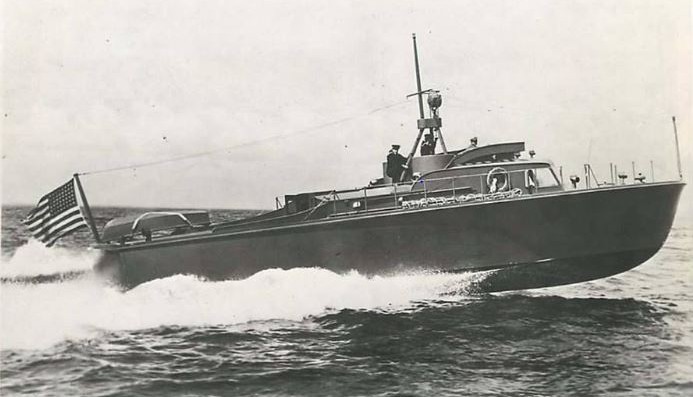
Crash Boat
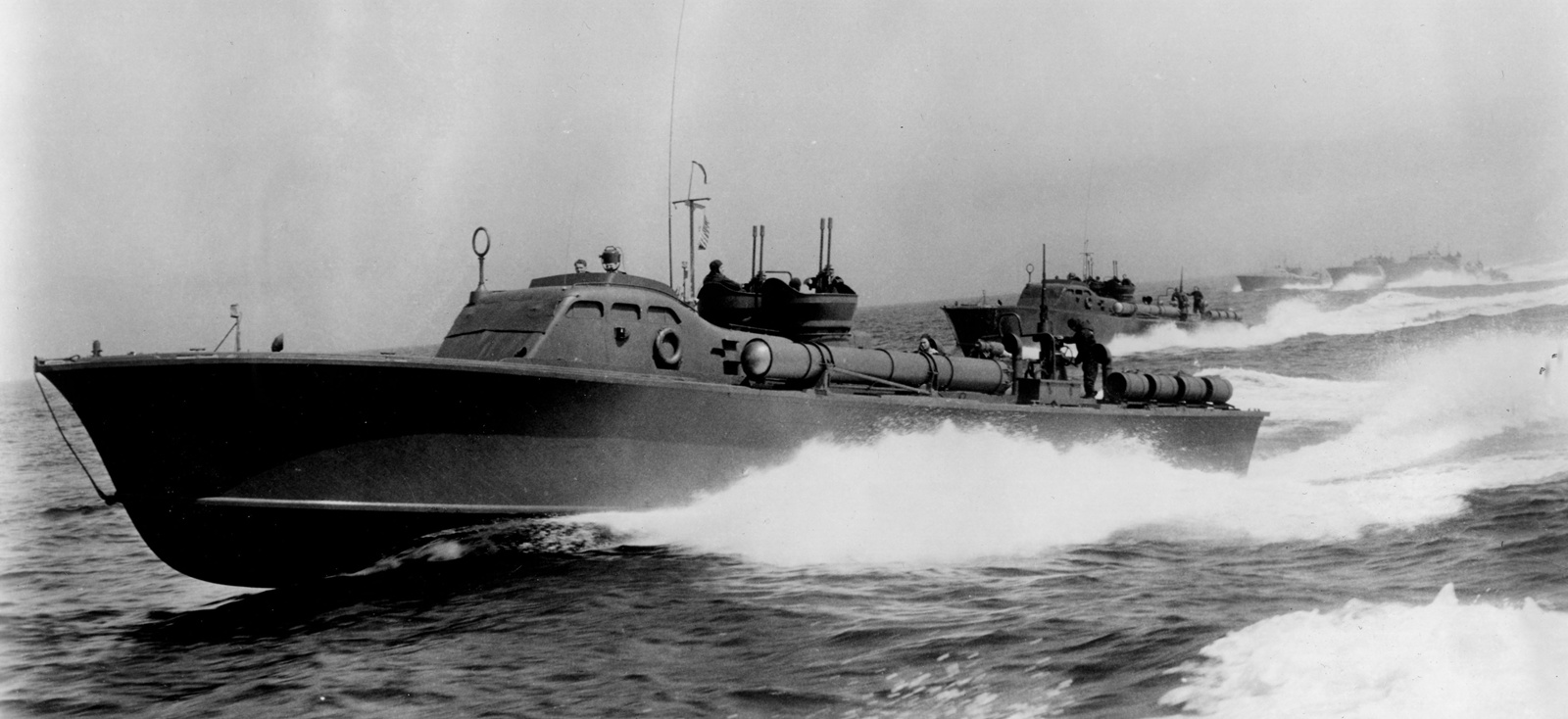
PT Boat
Rescue boats are often confused with PT boats, about the only folks that can tell the difference are those who served on the boats. While the two types of boats appear to be very similar, they are fundamentally different. The two most common PT boats were the 77 ft Elco and the 80 ft. Huckins, while the two most common rescue boat lengths which were the 63 and 85 feet.
The PT boat was designed to be low and aggressive, while the Rescue boat was built to be visible and observant. Think of it as the difference between a very small firetruck and an ambulance; the purpose of the firetruck is to attack the fire; the ambulance is to save the lives of the fire’s victims. While both types were similar in profile, the PT boats, at least early in the war, were “squattier” to better sneak in close to the enemy before firing their troublesome torpedoes. The rescue boats were a bit taller, with a more substantial mast to aid is finding the survivors. As a result of this difference in mission the rescue boats were comparatively lightly armed, primarily to defend themselves against an enemy that found them. The PT boats’ mission was to take the fight to the enemy, so the most obvious difference was their large torpedo tubes. Even when the tubes were replaced with racks, when armed with torpedoes, the difference was obvious.
Up until late 1943 our torpedoes were junk. The Mark 14 ran about 11 feet deeper than they were set to run. If its Mark 6 impact trigger hit its target straight on, the firing pin was so fragile that it frequently broke before setting off the main charge, and the magnetic triggers were also unreliable. There were other problems with our torpedoes, extensively documented in several books. As a result, PT boats had a change in mission that resulted in their being up-gunned to become "barge busters", effectively becoming high speed gunboats. Late-war PTs look like floating armories, bristling with machine guns, 37 or 40 mm cannons, and mortars which more readily differentiated them visually from rescue boats. Their new primary objective became the barges that were resupplying Japanese troops, many of whom were, or were in danger of, being stranded on the islands of the Pacific.
Both PT boats and rescue boats participated in many clandestine missions, supplying and moving coast watchers, providing medical supplies and assistance to the islanders, delivering high priority parts and supplies and both PTs and rescue boats also performed rescue missions. Unfortunately for the AAF rescue boats, they were treated as base equipment and thus their log books only were retained for a year, so their patrols are largely lost to history, whereas the navy log books were retained permanently. Thus, the record of the PT boats is well preserved while that of the rescue boats is largely lost. The fact that AAF logbooks were treated as tempoary administrative records is one of the greatest losses to WWII maritime history. When the records are gone, the histories rely on private diaries and veteran accounts, which is exactly why I'm trying to "keep the memory alive."
Boat Builders
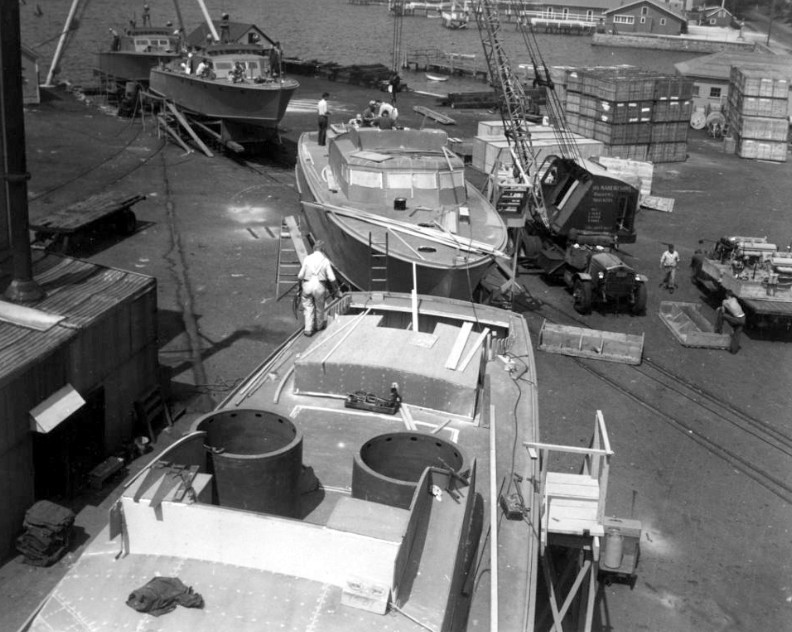
The above is a Herreshoff Manufacturing Co. photo, taken 25 July 1944 at their Walker's Cove facility in Bristol, RI. It appears that the second boat may be having it's engines installed, with one on the crane and one on the truck at the extreme right. About two boats a week came out of their big shed from the fall of 1944 into 1945. Here several are shown as they progress to launch. It appears that considerable work remained to be done after launching. The 450-foot-long shed known as the Yacht-Drome had been turned into a boat factory for the war effort. But it all ended in early 1945. As the last of the government contracts ended, these boats were among the last built by the original Herreshoff Manufacturing Company. More information about this legendary designer and builder at www.herreshoff.org One hundred vessels, of which the 63' rescue boats were the smallest, had been built in a about three years.
John Trumpy & Sons, a.k.a. Mathis Yachts, of Gloucester, New Jersey was another east coast crash boat builder, although much of their production was 110' sub chasers, and all of the thirty rescue boats built for the US Navy in 1943 and 1944 were sent to Russia designated as PTC37 through PTC66. One usually reliable source lists these boats as 77' boats and may have been based on a PT boat design. Another usually reliable source states that these were 63' MSC designs. I believe that the majority of the evidence supports the 63 ft. conclusion. After the war, John Trumpy & Sons relocated to Annapolis, Maryland.
Dooley’s Basin & Drydock - Pretty much everyone familiar with the rescue boats of WWII is familiar with Miami Shipbuilding Corp., much less so their neighbor, Dooley’s Basin and Drydock in Ft. Lauderdale, FL. S. Paul Dooley established Dooley’s Marina on the New River in Ft. Lauderdale, FL in 1936. Shortly after establishing the marina he started expanding the operation, eventually having a 500-ton railway, a 50-ton liftway and a 40-ton crane. Before the end of WWII there was a railroad spur going directly to their crane so the smaller boats could be quickly loaded on flatbed rail cars.
In October 1941, the Army contracted with Dooley’s to build four 104’ rescue boats. On Labor Day, 1942 the final two were launched, along with a Navy subchaser. The ceremony was limited to five minutes so as not to interfere with war production. During WWII, Dooley’s was Broward County’s largest private employer. During the war years they produced twenty of the 104s, twenty-eight of the 85’ ASR boats, twenty-two 38’ J-boats and twenty-five 27’ J-boats for the USAAF. From available records it appears that they only built a few subchasers or minesweepers for the Navy.
In 1948 Dooley rented, then sold the business to Frank A. Denison, who renamed the business Broward Marine, which continued to be the largest private employer in Broward. After the war they built prefab housing for export to England to replace housing destroyed during WWII. They also produced minesweepers for the Navy, securing a contract for eleven in 1953 at $1,000,000 each. Later they built over 200 custom yachts that are still considered to be among the finest in the world.
Frank’s son Chris “Kit” Denison established Denison Yachts in 1983, the evolution from Broward is not clear, which was an active builder through 2009. Their yachts were all aluminum hulls, all fast, and in the 100 to 130 ft range, although after 1987 they almost exclusively built mega-yachts, a few over 200 ft. in length. Each one appears to have been unique. Today Denison continues as a yacht brokerage business. About 2000 the construction portion of the business was sold and became Broward Shipyard and is a mega-yacht repair facility in Dania Beach, Florida, just south of Fort Lauderdale. It has been reorganized twice since then and is not related to Denison Yacht Brokers.
Stephens Brothers in Stockton, California was another major yacht builder who produced boats for the war effort, supplying both the Army and the Navy. They were in business from 1902 through 1987 and during that period produced approximately 1,200 boats. They built many 104' rescue boats for the Army, in addition to 72' tugs, and 63' rescue boats for both the Army and the Navy. When I started researching in order to add US Navy boats to my database I located the Navy hull numbers for these boats.The hull numbers are listed with the boats in the database under Boats, Builders, & Dates.
Harbor Boat Builders of Terminal Island, California built primarily for the Navy during World War II. They built a variety of boats including sub chasers, PT boats, and air sea rescue boats. Founded in 1919 as Harbor Boatbuilders, after the war they moved to Wharf St. in Wilmington, CA and did business as Harco. Later they were bought by LTV during the conglomerate craze prior to going out of business about 1975.
Fellows and Stewart Inc. of San Pedro, California was established in 1917 and was sold in 1967 to Harbor Boatbuilding. During WW II they were a major west coast builder of sub chasers and crash boats, both for the U.S. Army and Navy.
Many of the boats built on the west coast went to one of two outfitters for the addition of galley equipment, bedding, lifejackets, etc. The outfitters were Barbee Marine Yards of Renton and Olsen & Wing Marine of Ballard, which was in the Seattle area.