
Engines
The 63-foot crash boats were, in most cases, constructed with the Hall-Scott engines, though there were a few notable exceptions. These variations are documented within the individual model descriptions found in the 63-foot section under Design & Construction, where specific differences in propulsion and configuration are outlined.
The larger 85-foot crash boats, by contrast, showed far greater uniformity. All were powered by twin Packard 4M-2500 engines, a reliable and powerful setup that became a defining characteristic of the class and contributed significantly to their speed and operational effectiveness.
The 104-foot crash boats reflected a longer and more gradual evolution in design. Built over an extended period, their propulsion systems changed as engine technology advanced and wartime production needs shifted. Early vessels were equipped with Kermath engines, later replaced by Hall-Scott powerplants, and ultimately standardized with Packard engines in the later builds, illustrating the steady progression of engineering improvements throughout the program’s lifespan.
Packard 4M-2500
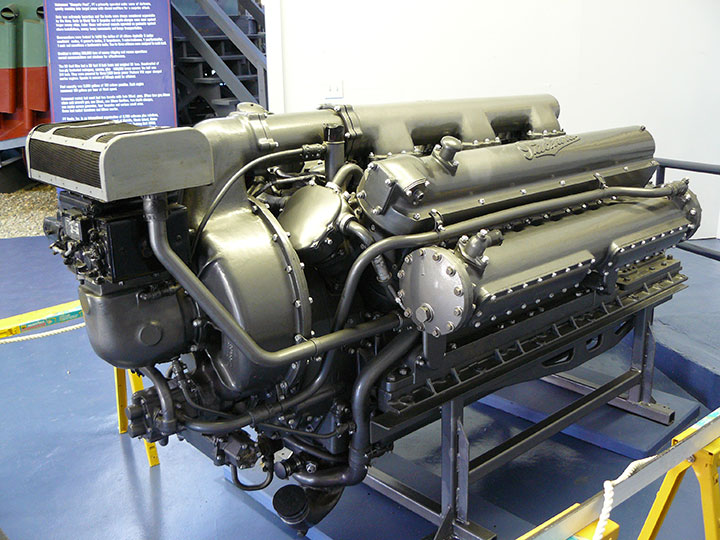
Contrary to what is often repeated in secondary sources, the Packard V-12 4M-2500 marine engine did not originate as a copy of the British Rolls-Royce Merlin. Packard did eventually build Merlin engines under license, but that production began well into the war years, and those aircraft engines were considerably smaller, displacing 1,670 cubic inches. The 4M-2500 followed a separate developmental path.
Hall Scott Defender
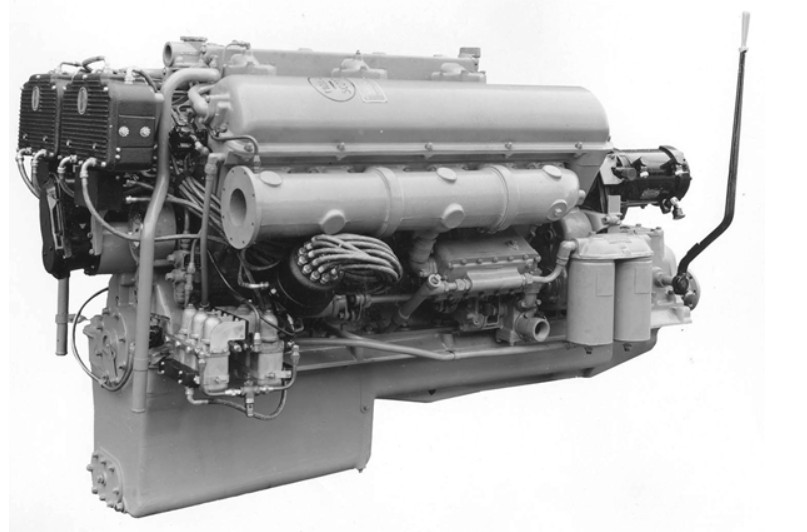
The Hall-Scott V-12 Defender engine came into existence in 1937, born from a request by the British government for a powerful and reliable marine powerplant. In response, Hall-Scott engineers combined two of their proven Invader engines—described in earlier sections—into a single, larger V-12 configuration. The result was an engine designed specifically to meet the growing demands of high-speed naval craft at a time when global tensions were rapidly escalating.
Kermath Sea Raider
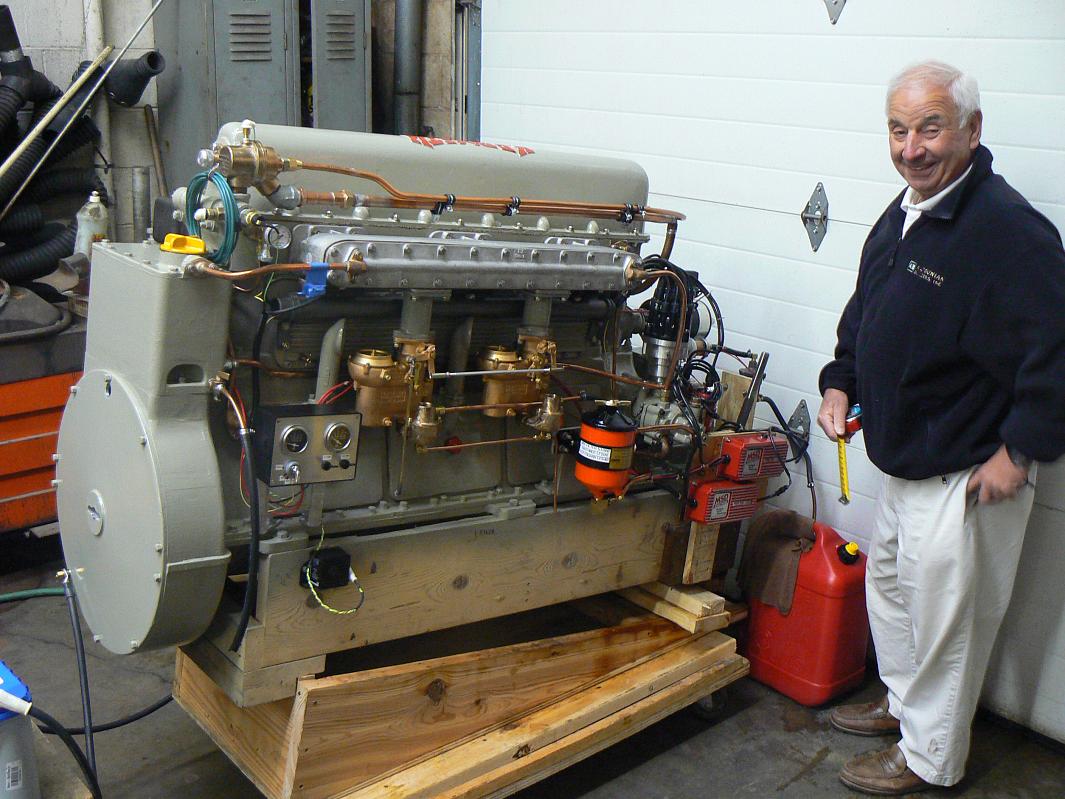
he Sea Raider Special was a twelve-cylinder, V-type marine engine and served as the original powerplant for the early 104-foot crash boats. As engine technology advanced and operational demands increased, it was eventually replaced—first by the Hall-Scott Defender and later by the more powerful Packard 4M-2500 engines. With a displacement of 1,414 cubic inches and an output ranging between 450 and 550 horsepower, the Sea Raider Special was notably smaller than the engines that succeeded it, yet it represented a sophisticated design for its time.