Class One - 104 Ft. Crash Boats
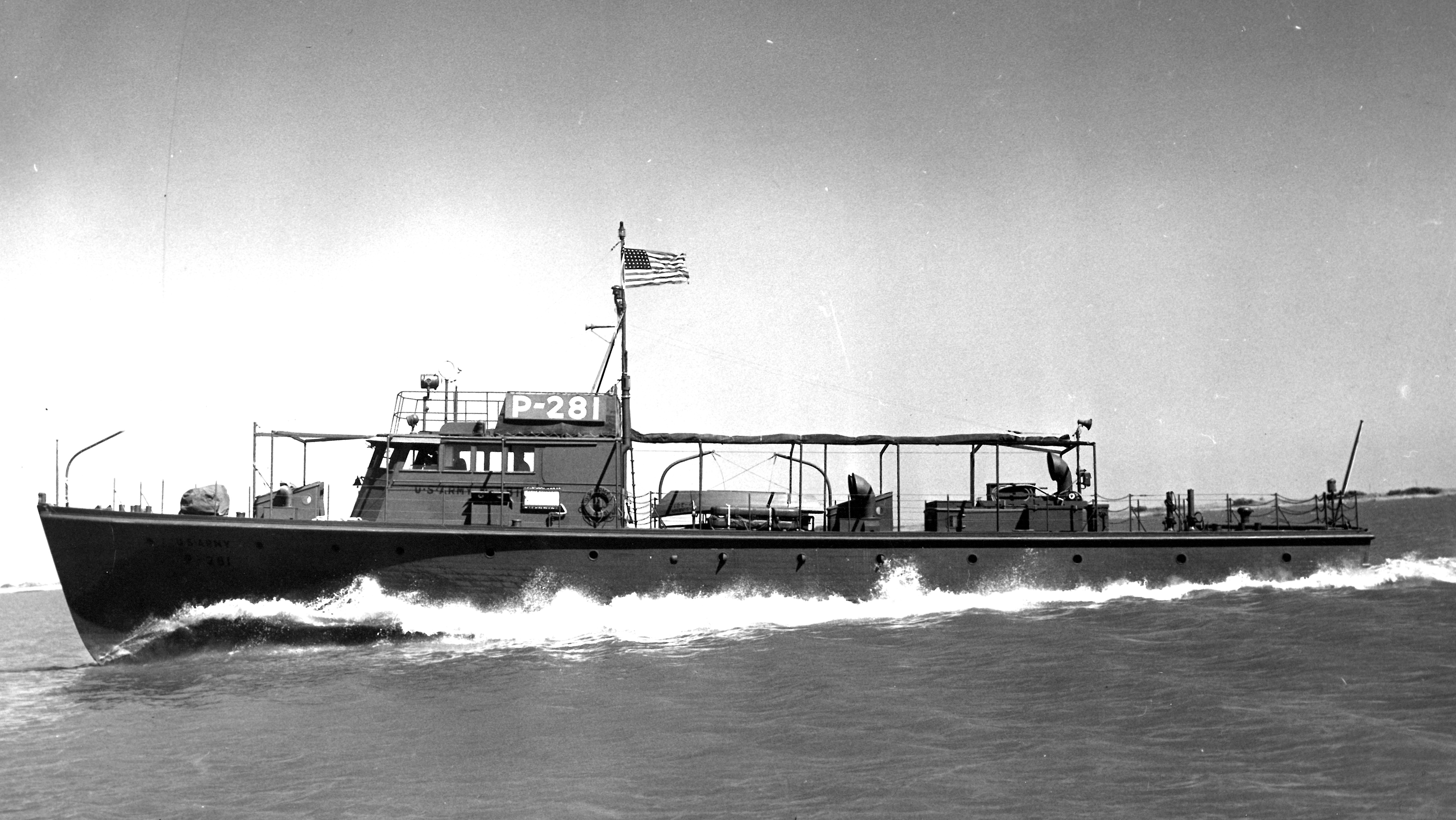
File: 104\Stephens P-281
Designed by Benjamin Dobson of Fair Harbor, Massachusetts just before the outbreak of World War II, the 104‑foot rescue boats represented the most ambitious class of U.S. Army Air Forces crash boats. Known during the war as “Class I” boats, they were praised for being comfortable, well‑equipped, and capable of treating up to twenty‑three patients in a fully stocked onboard dispensary. In practice, space allowed for seventeen litters, but the medical facilities were still unmatched among rescue craft of the era. Their longer hulls and displacement design gave them a steadiness in rough seas that smaller rescue boats lacked, allowing them to remain on station for extended periods. Their weaknesses were equally clear: they were lightly armed and comparatively slow, cruising at about 18 knots and reaching just over 21 knots at full throttle.
The earliest 104‑footers relied on three Kermath V‑12 engines, each producing 625 horsepower. Surviving documentation does not confirm whether the port engine was left‑handed—turning counterclockwise when viewed from the stern—but Kermath manufactured both right‑ and left‑handed Sea Raider engines, making it likely that the port engine was indeed left‑handed. Later boats in the 200‑series adopted three Hall‑Scott engines of roughly 650 horsepower each, with the port engine definitively left‑handed. The final wartime iteration, the 700‑series, began life as QS (Quick Supply) boats and carried two Packard 4M‑2500 engines of about 1,500 horsepower apiece. These Packard‑powered boats were noticeably faster, achieving acceptance‑trial speeds of 27 to 28 mph. They were also the only 104‑footers fitted with twin rudders and a 2:1 reduction gear to better translate engine power into usable thrust. According to one knowledgeable source, boats P‑749 through P‑756 were later rebuilt and renumbered as QS‑49 through QS‑56, receiving a redesigned aft hull with hard chines to reduce rolling and to create space for a cargo hold and deck gear.
Among the regions where the 104s served, Alaska and the Aleutians proved to be where they were most valued. Boats assigned to these waters received a “cold‑weather package”: a hot‑water boiler feeding convectors for interior heat, an additional 500‑gallon freshwater tank, ice sheathing on the hull, and insulation throughout the vessel—possibly including the pilothouse. This insulation was more than a comfort measure; it prevented the heavy condensation that plagued the smaller 85‑foot boats when warm interior air met the frigid hull and deckhouse. Even so, the 104s were not confined to northern latitudes. They also operated in the South Pacific and the Caribbean, where boats intended for warmer climates were fitted with electric heating systems instead.
Construction of the 104‑foot rescue boats was spread across several yards: Casey Boat Builders in Fairhaven, Massachusetts; Ventnor Boat Works in Atlantic City; Dachel‑Carter Shipbuilding in Benton Harbor, Michigan; Brownsville Boat in Texas; and Stephens Brothers of Stockton, California. Yet some accounts insist that the finest examples destined for the 10th Emergency Rescue Boat Squadron came from Sagstad Shipyard in Seattle, a yard with deep experience building North Pacific fishing vessels. Boats bound for the 10th ERBS—and others—were sent to Barbee Marine Yards in Renton or Olsen & Winge Marine near Seattle for final outfitting, where they received everything from bedding to pots, pans, plates, and silverware. The Stephens Brothers boat pictured at the top of this article carried the framework for tropical canvas, though the canvas itself had not yet been installed. After the war, four of these boats were transferred under Lend‑Lease—one to Cuba and three to the Dominican Republic.
In their Model A configuration, the 104‑footers measured 104 feet 9 inches in length, with a beam of 19 feet 2½ inches and a draft of 5 feet 3 inches. They displaced roughly 83 long tons and carried 4,000 gallons of gasoline, 60 gallons of lubricating oil, and 960 gallons of fresh water. Fuel consumption was prodigious: at full power they burned about 200 gallons per hour, giving them a range of roughly 550 miles over twenty hours. At more economical settings—running on a single Hall‑Scott engine—they could stretch that range to about 1,500 miles. Crews typically numbered between twelve and fourteen, including a master, first mate, navigator, radio operator, two engineers, an oiler, a medical technician, a cook, and several able seamen.
To date, documentation confirms the construction of 93 boats, not counting those built specifically as Quick Supply vessels. The oft‑quoted total of 158 may include these QS boats, but the true number remains uncertain.
The 72-ft. Rescue Boat
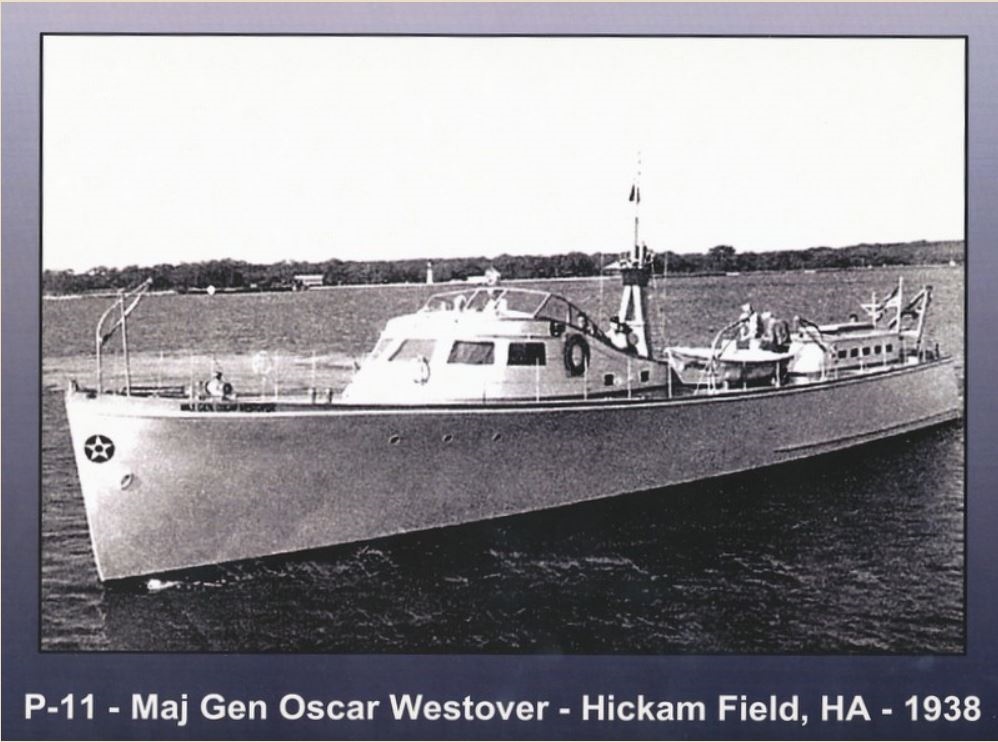
These boats, built by Greenport Basin, Greenport, NY 1940 are historically important because they represent one of the earliest American attempts at purpose‑built air‑sea rescue craft, predating the standardized AAF crash‑boat program. The 72‑foot air‑sea rescue boats fit into a very specific niche of pre-WWII crash‑boat development — and while they’re less documented than the 63‑, 85‑, and 104‑foot classes, we can place them in context using what’s known about the broader crash‑boat program and adjacent Allied craft.
There is no official 72‑ft AAF or USN rescue‑boat class in the U.S. procurement records. The U.S. did not field a standardized 72‑foot crash‑boat class during WWII; however, several Allied services — especially the Royal Australian Navy — operated American‑built rescue boats in the 70–75 ft range, derived from U.S. anti‑submarine and patrol‑boat hulls. These were essentially “air‑sea rescue launches” rather than the formal AAF crash‑boat classes.
These boats fall into a “blind spot” in U.S. small‑craft history because:
- Built before standardized crash‑boat classes
- Delivered in small numbers
- Often transferred between Navy, Coast Guard, and wartime districts
- Many were re‑engined, rebuilt, or redesignated during the war
- Few survived past 1947
Navy procurement records and period Greenport designs show:
- Length: 70–72 ft
- Beam: ~14–16 ft
- Draft: ~4–5 ft
- Hull type: Hard‑chine planing hull
- Construction: Double‑planked mahogany over oak frames